There's a special kind of magic in deciding to create a piece of jewellery that’s yours and yours alone. When you type "custom jewellery designers near me" into a search bar, you're not just looking for a product; you're starting a journey to craft something that tells your story. This isn't about picking something out from behind a glass counter. It's about a creative partnership, and this guide will walk you through finding the right artisan to bring your vision to life.
The Art of Creating a Truly Personal Piece
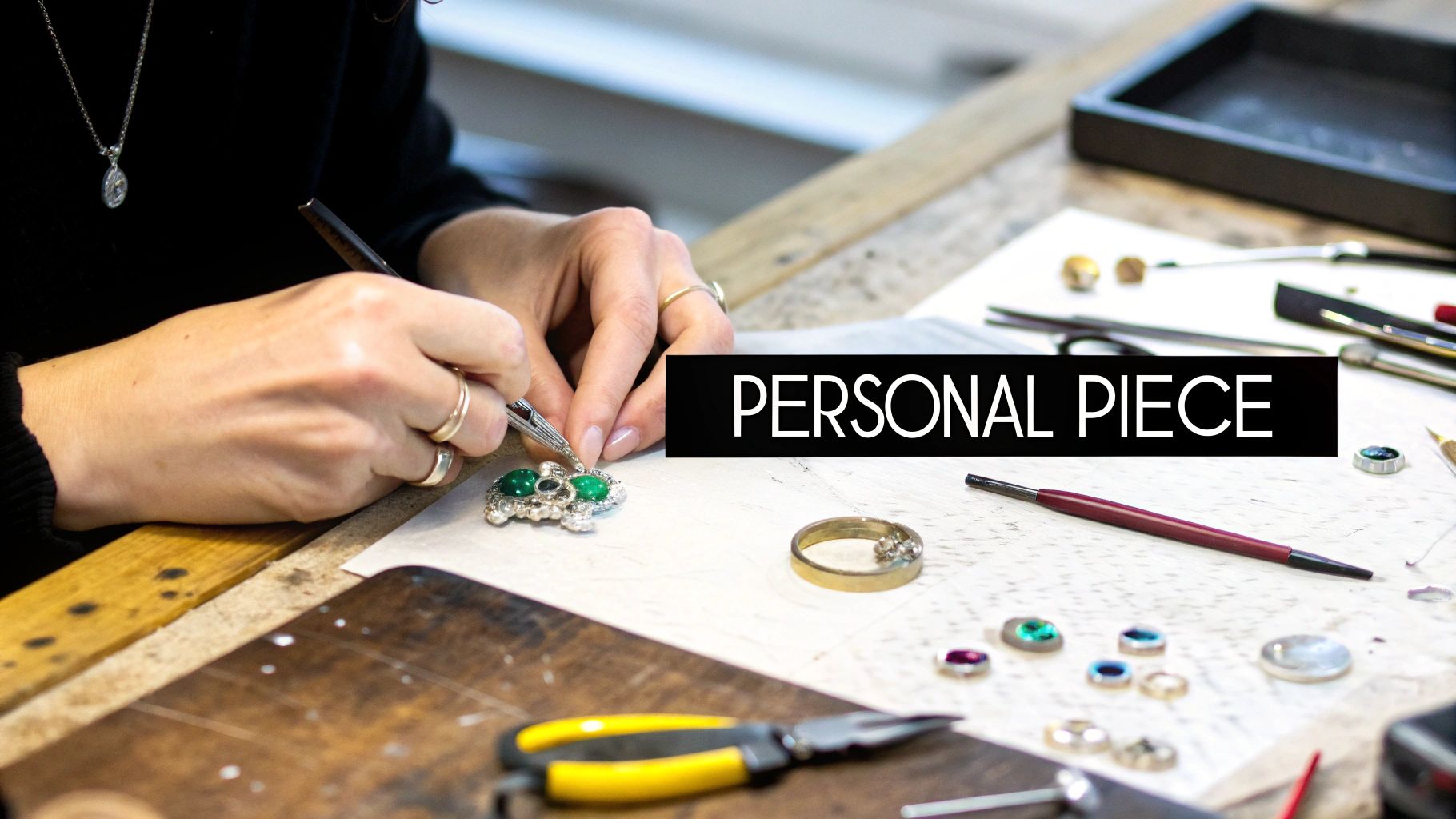
Opting for custom jewellery is about so much more than just the final, beautiful object. It's an investment in artistry and a commitment to creating something deeply personal. You're not just a customer; you become a co-creator, turning a fleeting idea into a tangible heirloom that captures your personality, a cherished memory, or a significant milestone.
There's a level of trust and intimacy you get when working with a local artisan that you just can't find with big retailers. Imagine sitting down with the designer, sharing your ideas and inspirations, and seeing them sketch out your vision right in front of you. That direct connection ensures every detail, from the exact shade of a gemstone to the delicate curve of the setting, is exactly as you dreamed it would be.
Why Australians Are Choosing Bespoke
Across Australia, there's a definite shift away from the mass-produced and towards the meaningful. People are searching for authenticity and a way to tell their unique stories through what they wear. A bespoke piece is the ultimate form of self-expression—maybe it's an engagement ring designed around a stone from your grandmother's necklace, or a pendant that celebrates a personal triumph.
This growing desire for one-of-a-kind jewellery is making waves in the market. The Australian jewellery sector was valued at around AUD 5.09 billion in 2024 and is expected to climb to nearly AUD 6.7 billion by 2034. A huge part of that growth comes from people like you, who want pieces with a story, not just a brand name. You can explore more insights into the Australian jewellery market to see just how strong this trend is.
Think of this process less like shopping and more like commissioning a tiny piece of art you can wear every day. It's about creating something that is entirely, unequivocally you.
The Benefits of a Local Partnership
Working with custom jewellery designers in your own community has some real, practical advantages. Beyond the simple convenience, you're investing in local talent and keeping traditional skills alive right in your neighbourhood.
Here’s why going local makes all the difference:
- Direct Collaboration: Nothing beats a face-to-face chat for getting your ideas across clearly and building a real connection with the person making your piece.
- A Hands-On Process: You'll often get to see and touch wax models or view the work in progress, which gives you incredible peace of mind and excitement for the final result.
- Supporting Local Craftsmanship: Your money goes directly to a skilled artisan, helping to sustain their craft and enrich your local creative scene.
This guide is designed to give you the confidence to move through every stage of this exciting process, from that first online search to the moment you finally hold your finished piece.
How to Find the Right Local Jewellery Designer
Finding the right person to bring your vision to life is less about a simple search and more about a creative hunt. You're not just looking for a jeweller; you're looking for an artisan, a local craftsperson whose work truly speaks to you. Think of it as finding a creative partner.
Your journey will likely start online, but it’s all about knowing where to look. Visual platforms are an absolute goldmine here. Get lost in Instagram and Pinterest, where designers post their latest creations and works-in-progress.
To cut through the noise, use targeted hashtags specific to your area and the style you love. A search for #sydneycustomjewellery, #melbournejeweller, or #australianmadejewellery will instantly connect you with a vibrant local scene. Look for a style that makes you stop scrolling—whether that's clean and modern or something beautifully ornate and vintage-inspired.
Where to Look for Local Talent
Searching for a designer can feel a bit overwhelming, so it helps to have a few different angles of attack. Each method offers its own unique benefits, from the convenience of an online search to the tangible experience of meeting an artist in person.
Here's a quick comparison of the most effective ways to find a great local designer.
Comparing Local Designer Search Methods
| Search Method | Pros | Cons | Best For |
|---|---|---|---|
| Social Media (Instagram/Pinterest) | Highly visual, easy to browse portfolios, direct contact with designers. | Can be time-consuming to vet, quality can vary. | Getting a feel for a designer's current style and aesthetic. |
| Local Artisan Markets | See and handle the work in person, meet the designer face-to-face. | Limited selection, may only run seasonally. | Discovering unique, one-of-a-kind creators in a casual setting. |
| Design School Showcases | Discover emerging talent with fresh ideas before they're well-known. | Artists may have less experience with complex commissions. | Finding a hidden gem with a distinctive artistic voice. |
| Referrals from Friends/Family | Trusted recommendations based on real experiences. | Their style preferences may not match yours. | A reliable starting point if you value a proven track record. |
| Google/Local Directories | Quick and easy way to find studios nearby, access to reviews. | Top results may be larger stores, not independent artisans. | Building an initial list of local jewellers to research further. |
Ultimately, a mix of these methods will give you the most comprehensive view of the talent in your area. Start online to gather ideas, then try to see the work of your favourite designers in person if you can.
Moving from Digital to Physical
While a great online portfolio is essential, nothing beats seeing and feeling the craftsmanship for yourself. Make an effort to visit local artisan markets or craft fairs. This is your chance to hold the pieces, feel their weight, and chat directly with the person who made them.
Another brilliant tactic is to keep an eye out for graduate showcases from local design schools or TAFEs. These events are perfect for discovering up-and-coming talent with bold, fresh perspectives. You might just find the next big name before anyone else does.
Your goal isn't just to find someone who can make jewellery. It’s to find a creator whose passion and style genuinely align with your vision. The little details are what make their work—and your future piece—stand out.
As you start looking, you’ll notice that independent jewellers are the heart and soul of Australia’s custom design scene. The number of independent stores has dropped from around 2,700 in 2010 to just over 2,000 today, but those who remain have doubled down on what they do best. They now specialise in bespoke services, offering a deeply personal experience that you simply can't get from a big chain retailer. You can learn more about how independent jewellers are championing custom design in Australia in this industry report.
Creating Your Designer Shortlist
Once you start finding designers you like, you need a simple way to keep track of them all. A little bit of organisation now will save you from feeling overwhelmed later.
I recommend starting a simple spreadsheet or even a dedicated folder in your browser bookmarks. For each designer that catches your eye, make sure to log:
- Name and Contact Info: Their website, social media handles, and studio address.
- Style Notes: A few words to describe their aesthetic (e.g., "organic and textured," or "sleek geometric lines").
- Favourite Pieces: Save links or screenshots of specific designs you adore from their portfolio.
- Initial Gut Feeling: Jot down what made them stand out. Was it their incredible use of colour, a unique setting technique, or a glowing review you read?
This simple process helps you turn a sea of possibilities into a curated, manageable shortlist of your top contenders.
Vetting Their Reputation
The last step before reaching out is a bit of good old-fashioned homework. Online reviews are a fantastic resource, but the trick is knowing how to read between the lines. Check out feedback on Google Maps, wedding directories, and their social media pages.
Don't just glance at the star rating; dive into the actual comments. The most helpful reviews are the ones that talk about the experience. They’ll often mention things like the designer's communication style, their attention to detail, or the final quality of the piece.
Look for patterns. Is there consistent praise for their creativity and craftsmanship? Do people repeatedly mention how well they listened? That’s a massive green flag. This final check will give you the confidence you need to start contacting a few of your favourite custom jewellery designers near me for an initial chat.
Looking Closer: How to Vet a Designer's Craftsmanship and Style
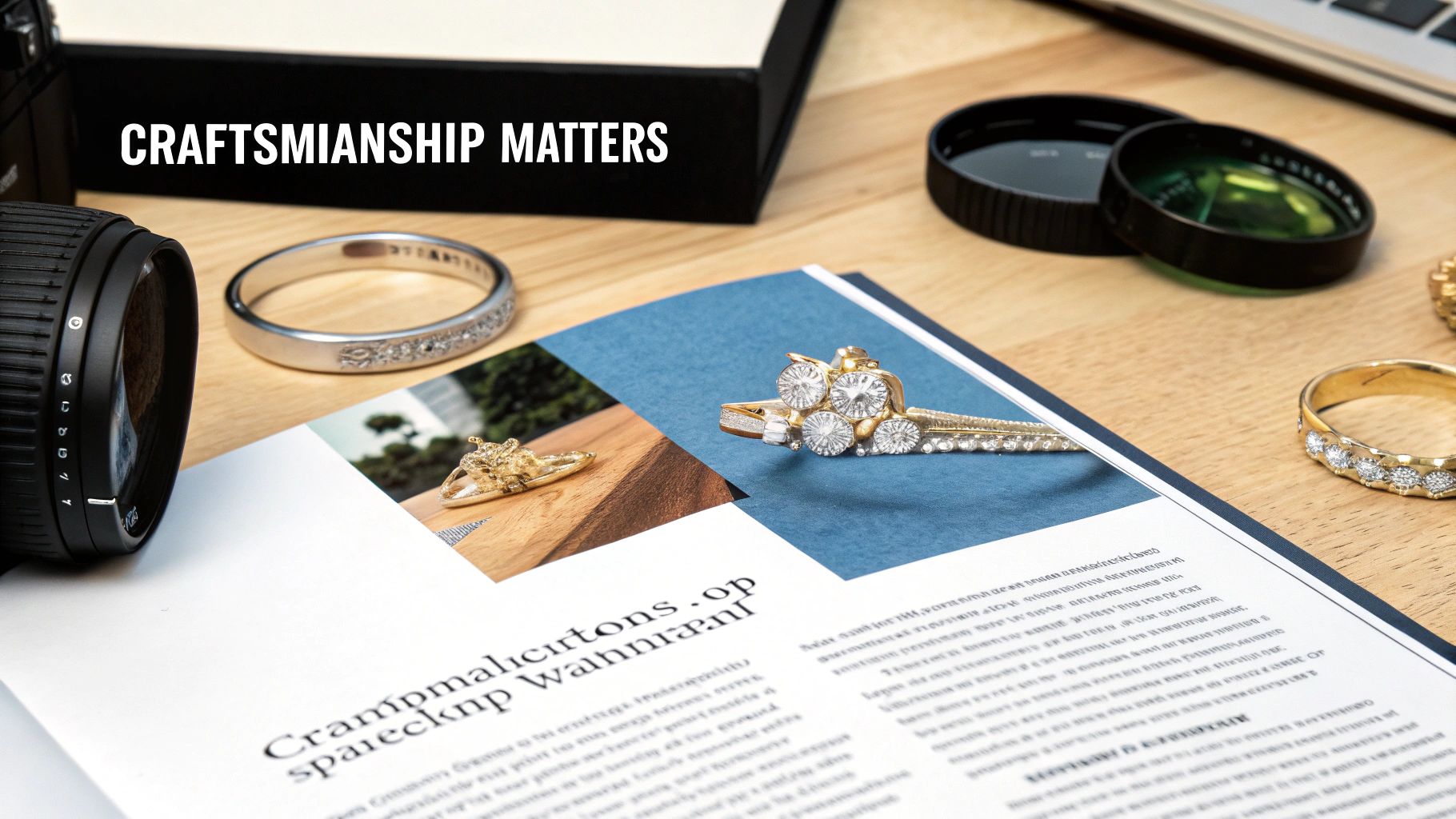
You’ve got a shortlist of local designers, which is a great start. Now for the real detective work. It’s time to move beyond a pretty Instagram feed and figure out who has the skill and artistry to create something truly exceptional. This is where you learn to analyse a portfolio like a pro, looking for the tell-tale signs of true craftsmanship.
Think of it as training your eye to see past the initial sparkle. A great portfolio is more than just a gallery of beautiful things; it’s a direct reflection of the jeweller's skill, precision, and creative voice. When you're looking at their past work, you're really getting a sneak peek at the quality and care they'll put into your own piece.
Analysing the Portfolio with a Critical Eye
First things first: look for high-resolution, close-up photos. If a designer only shows their work from a distance, that could be a red flag. A true artisan is proud of their work, down to the smallest detail, and they’ll want you to see it.
Look for a consistent level of quality across their entire body of work. Does that simple pendant show the same attention to detail as the show-stopping engagement ring? This consistency is the hallmark of a disciplined and genuinely skilled craftsperson.
Here are a few specific things to zoom in on:
- Symmetry and Proportions: Do the pieces look balanced? Are the lines clean and the curves smooth and deliberate? Everything should feel harmonious.
- Setting Quality: Pay close attention to how the gemstones are set. The prongs holding a stone should be uniform, evenly spaced, and secure the gem without smothering it. For bezel settings, the metal should wrap around the stone in a flawless, smooth circle.
- Finishing and Polishing: The surface of the metal should be impeccable. Look for a mirror-like shine on polished areas or an even, consistent texture on matte finishes. Any visible solder marks or rough spots are signs of rushed or inexperienced work.
Don’t just look at the design; look at the execution. A brilliant idea is only as good as the hands that bring it to life. Flawless finishing is often the biggest giveaway that separates an amateur from a master jeweller.
The Importance of Credentials and Specialisation
While a stunning portfolio speaks volumes, professional credentials give you that extra layer of confidence. They’re proof of a real commitment to the craft and a sign that the designer adheres to industry standards.
Keep an eye out for qualifications or memberships like:
- GIA or GAA Certifications: Credentials from the Gemological Institute of America (GIA) or the Gemmological Association of Australia (GAA) mean they have expert knowledge in grading and identifying gemstones.
- Jewellers Association of Australia (JAA) Membership: Being part of a respected industry body like the JAA usually points to a commitment to ethical practices.
- Formal Qualifications: A degree or trade certificate in jewellery design or metalsmithing shows they’ve put in the time to build a solid technical foundation.
This vetting process is more important than ever. The Australian market for personalised jewellery is booming, projected to hit USD 3.69 billion by 2030. We’re all looking for unique ways to express ourselves, and a custom piece does just that. You can read more about Australia’s bespoke jewellery market trends to see what’s driving this shift.
Matching Their Style to Your Vision
Beyond pure technical skill, you need to find a designer whose artistic signature just clicks with you. Every artist has their own point of view. Trying to get a minimalist designer to create an ornate, vintage-inspired ring is a bit like asking a landscape painter to create an abstract sculpture—they might give it a go, but it won’t be their finest work.
Here’s how to think about it:
- Scenario One: You’re dreaming of a delicate, Art Deco engagement ring with intricate filigree. Designer A’s portfolio is full of sleek, modern designs with bold, clean lines. But Designer B’s website is a gallery of vintage-inspired pieces that show off their skill with detailed metalwork. Designer B is clearly your person.
- Scenario Two: You’re after a chunky, contemporary signet ring with a unique, hammered texture. Designer C’s work is mostly classic, traditional solitaires. Designer D, on the other hand, has a portfolio filled with organic textures and strong, modern forms. Designer D is the one who will get your vision.
Getting this right is crucial. Taking the time to properly assess craftsmanship and make sure your styles align ensures you’re not just commissioning jewellery. You’re starting a collaboration with an artist who is perfectly equipped to bring your unique story to life.
Your First Meeting with a Custom Jeweller
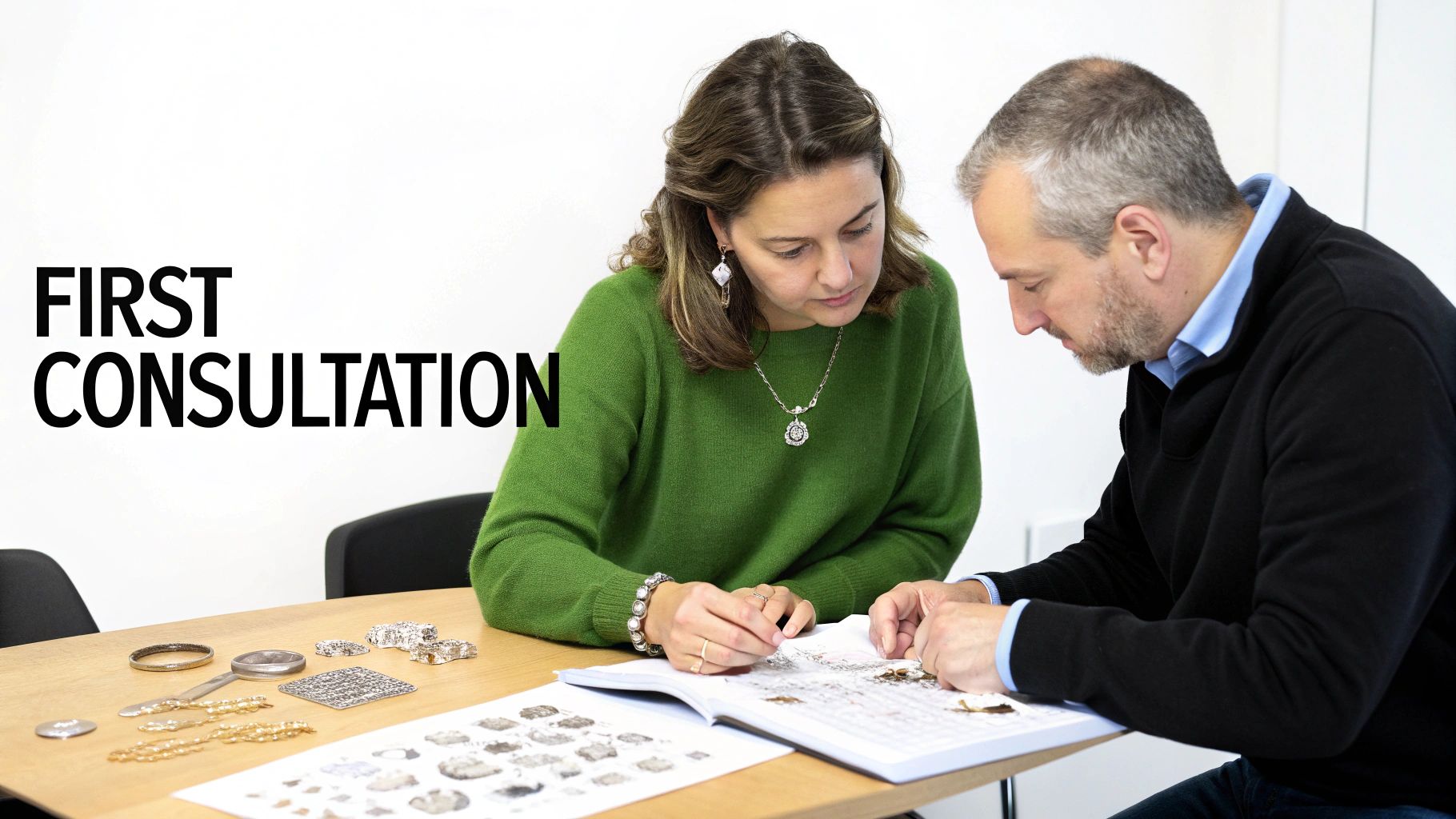
This first conversation is where the magic begins. It’s the moment your dream piece starts its journey from a vague idea to a tangible concept. Think of the initial consultation not as a sales pitch, but as a creative brainstorm—a chance to see if you and the designer click. This is your opportunity to lay all your cards on the table: your vision, your budget, and your personality.
Feeling prepared will make for a far more productive and exciting discussion. Your goal is to walk away feeling confident, understood, and genuinely thrilled about what comes next. It’s less about finalising every tiny detail and more about building a collaborative partnership.
A great designer will guide the conversation, of course, but knowing what you want to achieve will make the entire experience smoother. This is your chance to make sure the person creating your jewellery truly gets the story you want to tell.
Preparing for a Productive Consultation
Walking into your first meeting armed with inspiration is the single best way to get your ideas across. Jewellers are visual people, so showing them what you love is far more effective than just trying to describe it. You don't need to have a perfect, fully-formed design in your head.
Instead, gather a collection of images that capture the feeling, style, or specific details you’re drawn to. Think of it like a mood board for your jewellery. This gives the designer a clear window into your aesthetic.
So, what should you bring to the table?
- A Curated Collection of Photos: Pull images from Pinterest, Instagram, or even magazines. Zero in on the specific elements you like—the texture of a band, the shape of a setting, or the colour of a particular gemstone.
- Existing Jewellery: If you have an heirloom piece you’d like to incorporate or redesign, bring it with you. Seeing it in person allows the designer to properly assess its condition and potential.
- A Clear Budget Range: Be honest and upfront about what you're comfortable spending. This isn't about limiting creativity; it's about guiding the design process. A true professional will respect your budget and suggest materials and techniques to create something beautiful within it.
Key Questions to Ask Your Designer
This consultation is a two-way street. While the designer is getting to know you and your vision, you should be getting a feel for their process, expertise, and communication style. Asking the right questions is how you vet them properly.
Treat it like an interview. After all, you’re commissioning a significant piece of art, and you need to trust the artist completely. Their answers will reveal a lot about their professionalism and how they treat their clients.
Here are a few essential questions to have ready:
- Can you walk me through your entire design process, from start to finish? This gives you a clear roadmap of what to expect, from initial sketches and CAD renderings to the final polish.
- How do you source your gemstones and metals? A transparent designer will happily discuss their suppliers and their commitment to ethical sourcing, like using conflict-free diamonds or recycled metals.
- What’s your policy on design revisions? It’s crucial to understand how many changes you can make and at which stages. Getting clarity here prevents misunderstandings down the track.
- What’s the estimated timeline for a project like mine? This helps you manage expectations, especially if you have a deadline in mind, like a proposal or an anniversary.
The most important part of this meeting is the personal connection. Do you feel heard? Does the designer seem genuinely excited by your ideas? Trust your gut—a strong rapport is the foundation of a successful collaboration.
Spotting Red Flags Early On
Just as important as knowing what to look for is knowing what to avoid. A trustworthy custom jeweller will be transparent, patient, and professional. High-pressure sales tactics have absolutely no place in a creative process.
Be wary of any designer who dismisses your ideas or tries to push you far outside your budget right off the bat. This journey should feel exciting and collaborative, not stressful.
Here are a few warning signs to watch for:
- Vague or Evasive Pricing: They should be able to give you a clear estimate based on your initial ideas and material choices.
- High-Pressure Sales Tactics: You should never feel rushed into making a deposit or a decision on the spot.
- Poor Communication: If they're hard to get hold of or unclear in their initial emails, it’s unlikely to get better once the project starts.
- Dismissiveness of Your Budget: A good designer works with you to find solutions, not pressure you to spend more than you're comfortable with.
Choosing one of the many talented custom jewellery designers near me is a big decision. This first meeting really sets the tone for the entire project, so take your time, ask plenty of questions, and choose a partner you genuinely connect with and trust.
Understanding the Custom Design Journey
Once you’ve found your designer, the real fun begins. You’re about to embark on the journey from a vague idea in your head to a beautiful, tangible piece of art you can wear. This is where your collaboration truly sparks to life.
Knowing what to expect at each stage makes the whole process less intimidating and genuinely exciting. A good designer is your guide, keeping you in the loop and making sure you feel confident at every step. They’re the ones who translate your vision into technical specs, hunt down the perfect materials, and bring it all together with skilled hands. Your job? Give clear feedback and sign off on each stage, making sure the final piece is everything you dreamed it would be.
From Concept to Computer-Aided Design
The first step is getting your ideas out of your head and onto paper (or, more likely, a screen). Most modern jewellers use Computer-Aided Design (CAD) software to create incredibly realistic, 3D models of your piece. It's a game-changer because you can see exactly what it will look like from every conceivable angle.
This is your first big checkpoint. You’ll get to review these digital mock-ups and ask for tweaks. Maybe the band feels a bit too chunky, or you’d like the main stone set a little lower. Now is the easiest and cheapest time to make those changes, so don't hold back.
Speak up! It's your piece, after all. Your designer is there to help you perfect it, and they’ll also offer professional advice on things like structural integrity or long-term wearability. They’ll make sure your design isn’t just stunning, but also built to last.
The Tactile Approval: The Wax Model
After you’ve given the thumbs-up to the digital design, many jewellers will 3D-print a wax or resin model of the piece. This is such a critical step. Holding a physical prototype in your hands gives you a real-world sense of scale, proportion, and even weight in a way that a screen just can't.
This is your chance to literally feel it out. How does the ring sit on your finger? Is the pendant the right size for the neckline you had in mind? This is usually the final green light before the metal gets poured, so take your time and make sure you’re 100% happy.
The wax model is often the "aha!" moment for clients. It’s the bridge between the digital concept and the finished piece, giving you total confidence to move forward to the casting stage.
Selecting Materials and Finalising Costs
While you probably discussed materials during your first chat, this is where the final decisions are made. If you’re choosing a feature gemstone, your designer might present you with a few hand-picked options that fit your brief. This is your chance to choose the exact stone that speaks to you.
With the design locked in and materials selected, you’ll receive a final, detailed quote. The payment is almost always split into two parts:
- Initial Deposit: Typically 50% of the total, paid once you approve the final design. This gets the casting and crafting process started.
- Final Payment: The remaining balance is due when the piece is finished, right before you take it home.
This structure is standard practice and protects both you and the jeweller throughout the project.
Before we dive into the final crafting, let's look at how these stages fit into a typical project timeline. Timelines can vary quite a bit depending on the complexity of your design and how busy the workshop is, but this gives you a good general idea.
A Typical Custom Jewellery Project Timeline
| Stage | Typical Duration | What Happens | Your Involvement |
|---|---|---|---|
| Consultation & Concept | 1-2 weeks | You meet with the designer, share ideas, and they develop initial sketches or concepts. | Share your vision, inspiration, and budget. |
| CAD Design & Revisions | 1-3 weeks | The designer creates a 3D digital model. You review it and request any changes. | Provide clear, timely feedback on the design. |
| Wax Model Approval | 1 week | A 3D-printed wax model is created for you to see and feel the design in person. | Try on the model and give your final approval. |
| Casting & Stone Setting | 2-4 weeks | The piece is cast in metal, cleaned up, and the gemstones are meticulously set by hand. | Sit back and wait for the magic to happen! |
| Finishing & Polishing | 1 week | The final polish, engraving, and any other finishing touches are applied. | Get excited for the big reveal. |
| Final Approval & Delivery | 1 day | You see the finished piece, make the final payment, and take it home. | Pick up your beautiful new jewellery! |
As you can see, a custom piece isn't an overnight project. Good things take time, and a process with multiple approval stages ensures there are no surprises at the end.
The Crafting Process and Final Delivery
Once all the approvals are ticked off, the real magic begins. Your designer will cast the piece, carefully set the stones, and spend hours meticulously finishing and polishing every surface. It’s a process that requires incredible skill and patience.
A good designer will often send you a photo or two during the process, which is always a nice touch. When the call comes that your piece is ready, it's a genuinely special moment. After making the final payment, you should walk away with more than just a box. Make sure you get:
- A Detailed Invoice: Your receipt, which should clearly list the specifications of your piece (metals, stones, etc.).
- A Valuation or Appraisal: This is a formal document stating the retail replacement value, which you'll need for insurance.
- Gemstone Certifications: Any significant diamond or precious gem should come with its grading report from a respected lab like the GIA (Gemological Institute of America).
Finally, have a chat about aftercare. Your designer will know the best way to clean and look after your new jewellery. Many local custom jewellery designers also offer lifetime complimentary cleaning and checks for their creations, which is a fantastic perk that helps build a lasting relationship.
Your Custom Jewellery Questions Answered
Diving into the world of custom jewellery is thrilling, but it's completely normal to have questions before you start. Knowing what to expect is the best way to feel confident and really enjoy the creative process with your designer. Let's tackle some of the most common queries that come up.
Getting the practical stuff sorted out first demystifies the whole experience. It means you can relax and focus on the fun part—bringing your perfect design to life.
This timeline gives you a bird's-eye view of the key milestones in a typical custom project, from the initial concept all the way to the finished piece.
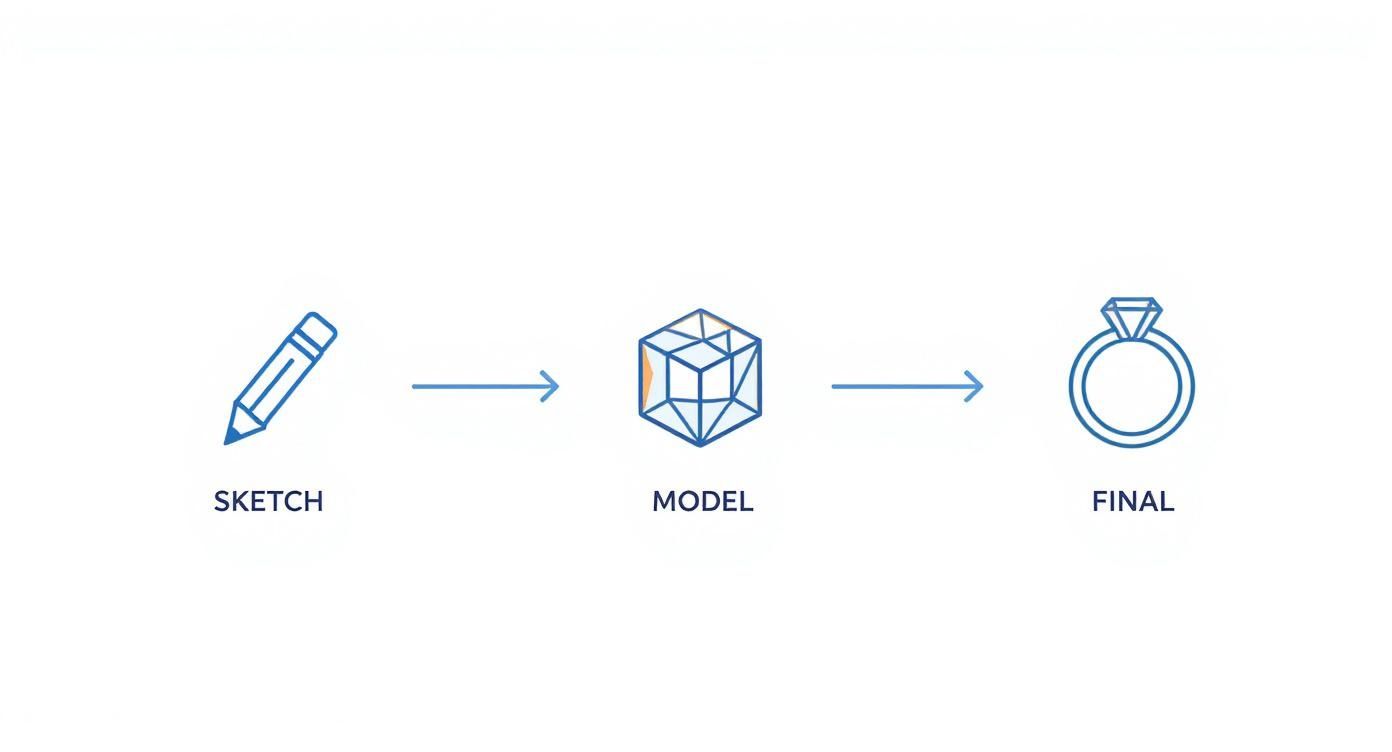
As you can see, it’s a collaborative journey with check-in points all along the way, making sure your vision is captured perfectly before any final work begins.
How Much More Is Custom Jewellery?
There's a persistent myth that "custom" is just another word for "unaffordable." While a truly elaborate piece with rare, oversized gems will definitely be an investment, you might be surprised to learn that many custom designs are priced similarly to high-end, off-the-shelf jewellery from big brand names.
The real difference lies in where your money goes. With a bespoke piece, you're paying directly for the precious materials and the jeweller's one-on-one time and expertise. You aren't footing the bill for a global advertising budget or a massive retail markup, which often means you get far better quality and craftsmanship for your money.
By working with custom jewellery designers near me, you get complete control over the things that affect the final price—like the type of metal, the size of the gemstone, and how complex the design is. This lets you create something truly special that fits your budget perfectly.
Can I Use My Own Gemstones or Gold?
Yes, absolutely! This is one of the most common reasons people turn to a custom jeweller. Giving heirloom jewellery a new lease on life is a beautiful and sustainable way to honour a piece's history while creating something that feels like you.
Maybe it’s the diamond from your grandmother's engagement ring or gold from old pieces you never wear. A talented jeweller can take these sentimental materials and transform them. First, they'll need to carefully assess the condition of your gems and metal to make sure they're up to the task of being unset and recast into a brand-new design.
What If I Don't Like the Final Design?
Honestly, a good, transparent custom design process is built from the ground up to make sure this never happens. You’re not just a customer; you’re a collaborator at every important stage, so there shouldn't be any big surprises when you see the final piece.
A professional will never move forward without your enthusiastic approval. Here's how it usually works:
- Sketches & CAD: You’ll review the initial drawings and computer-aided designs, requesting tweaks until it looks just right on screen.
- Wax or Resin Model: You'll often get to see and handle a physical 3D-printed model. This is your chance to confirm the piece's size, scale, and how it feels.
- Stone Selection: You'll give the final nod on the exact gemstones that will be set into your piece.
By signing off at each of these key moments, you ensure the final piece is exactly what you had in mind. Just be sure to ask about the designer's revision policy in your first meeting so everyone is on the same page.
How Long Does the Whole Process Take?
Great things take time, and a piece of handcrafted jewellery is no exception. While every project is different, you can generally expect the process to take anywhere from six to twelve weeks, from your first chat to the final handover.
A few things can affect this timeline:
- Design Complexity: A simple solitaire ring will come together much faster than an intricate piece with lots of tiny stones or detailed engraving.
- Your Feedback: The project keeps moving when you provide clear and timely feedback on designs and models.
- Sourcing Materials: If your heart is set on a rare or uniquely-cut gemstone, it might take a little extra time for your jeweller to track it down.
- The Jeweller's Waitlist: In-demand artisans can be booked up, so it's always smart to start the process well ahead of any specific date you need the piece by.
At Daniel Fine, we believe that the journey of creating a bespoke piece should be as beautiful as the jewellery itself. Our dedicated artisans guide you through every step, ensuring your story is captured with exceptional craftsmanship and transparent communication. Begin your creative partnership with us today.