When it comes to choosing the centre stone for a special piece of jewellery, particularly an engagement ring, the decision often circles back to two incredible modern options: moissanite and lab-grown diamonds. At first glance, they can look surprisingly similar, but the real difference lies in their very nature – their chemistry, their optical properties, and how they play with light.
A lab diamond is a real diamond through and through, just created in a controlled environment rather than deep within the Earth. It shares the exact same chemical makeup and timeless brilliance as its mined counterpart. Moissanite, on the other hand, is a completely different gemstone made from silicon carbide, celebrated for its own unique and intense, fiery sparkle.
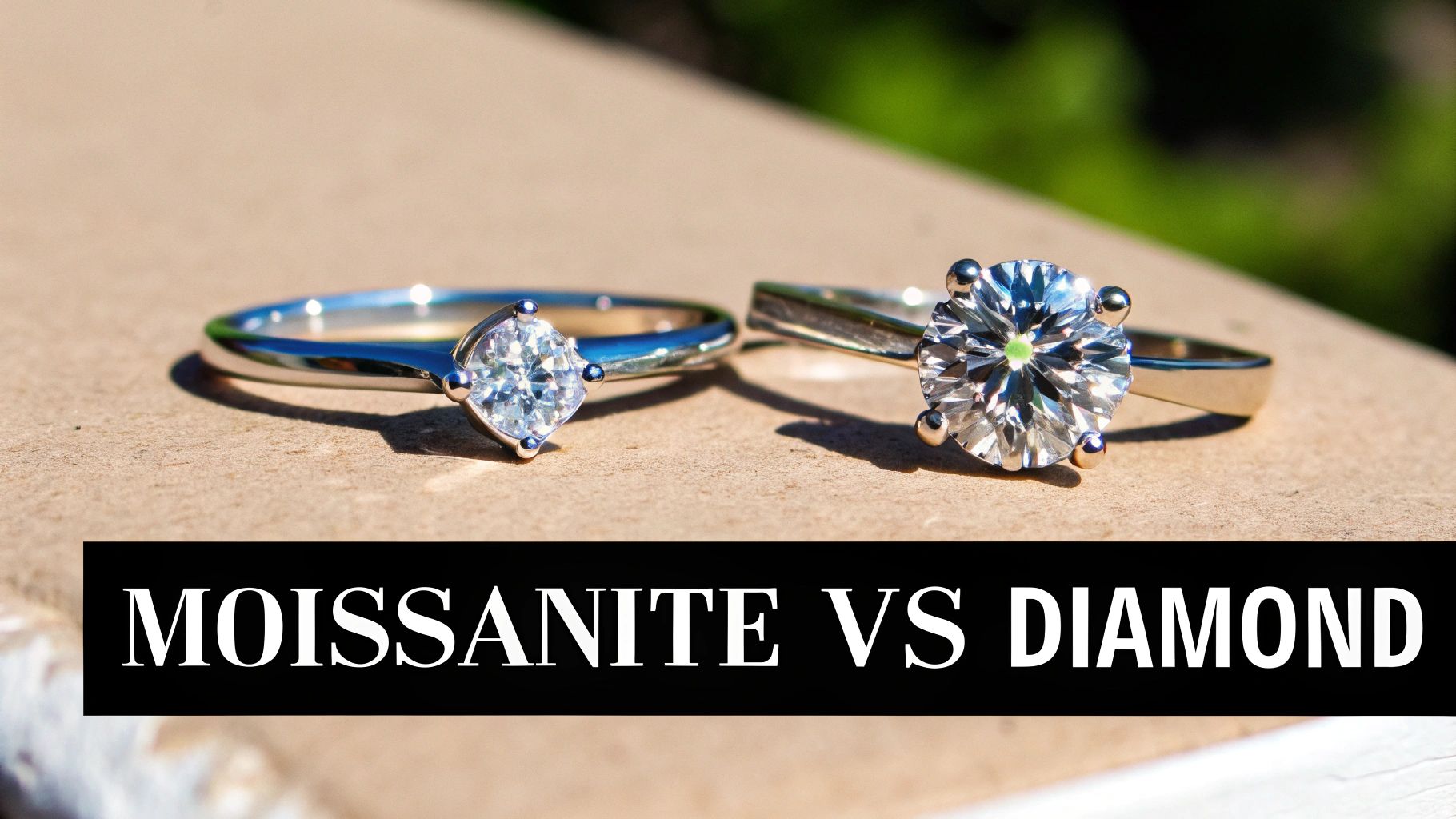
A Quick Comparison: Moissanite vs Lab-Grown Diamond
For our Australian clients weighing up these two beautiful stones, getting a clear picture of their core differences is the best place to start. While they might appear almost identical to the untrained eye, their composition, sparkle, and cost make them distinct choices.
A lab-grown diamond gives you all the prestige and classic beauty of a diamond, just with the added benefit of modern, ethical origins. Moissanite offers a truly dazzling alternative with its own exceptional fire, and it does so at a remarkably accessible price. To put it simply, here’s a quick breakdown of how they stack up.
Quick Comparison: Moissanite vs Lab-Grown Diamond
This side-by-side summary gets straight to the point, highlighting the fundamental attributes of moissanite and lab-grown diamonds to help guide your decision.
| Attribute | Moissanite | Lab-Grown Diamond |
|---|---|---|
| Composition | Silicon Carbide (SiC) | Pure Carbon (C) |
| Brilliance | Higher refractive index creating intense "fire" or rainbow sparkle | A classic, balanced return of both white and coloured light |
| Hardness (Mohs Scale) | 9.25 (Extremely durable, second only to diamond) | 10 (The hardest known natural mineral) |
| Cost | Significantly lower per carat | More affordable than mined diamonds, but more than moissanite |
Ultimately, both gemstones are fantastic, sustainable alternatives to mined diamonds. There's no single "better" choice here; it really comes down to what you value most.
If your priority is getting the biggest, most brilliant stone for your budget and you love an electrifying, rainbow-like sparkle, moissanite is an unbeatable option. But if what you truly want is the timeless elegance and authenticity of a diamond, a lab-grown diamond is the perfect fit.
Now, let's dive deeper into these differences, exploring everything from how they hold up to everyday wear to their long-term value, so you can confidently choose the perfect stone for your story.
Comparing Brilliance, Fire, and Overall Sparkle
The way a gemstone plays with light is what gives it life, and this is where you’ll see the most noticeable difference between a moissanite and a lab-grown diamond. While both are undeniably beautiful, they offer a completely different visual experience. To really get a feel for this, it helps to understand the three ingredients that create a stone’s sparkle.
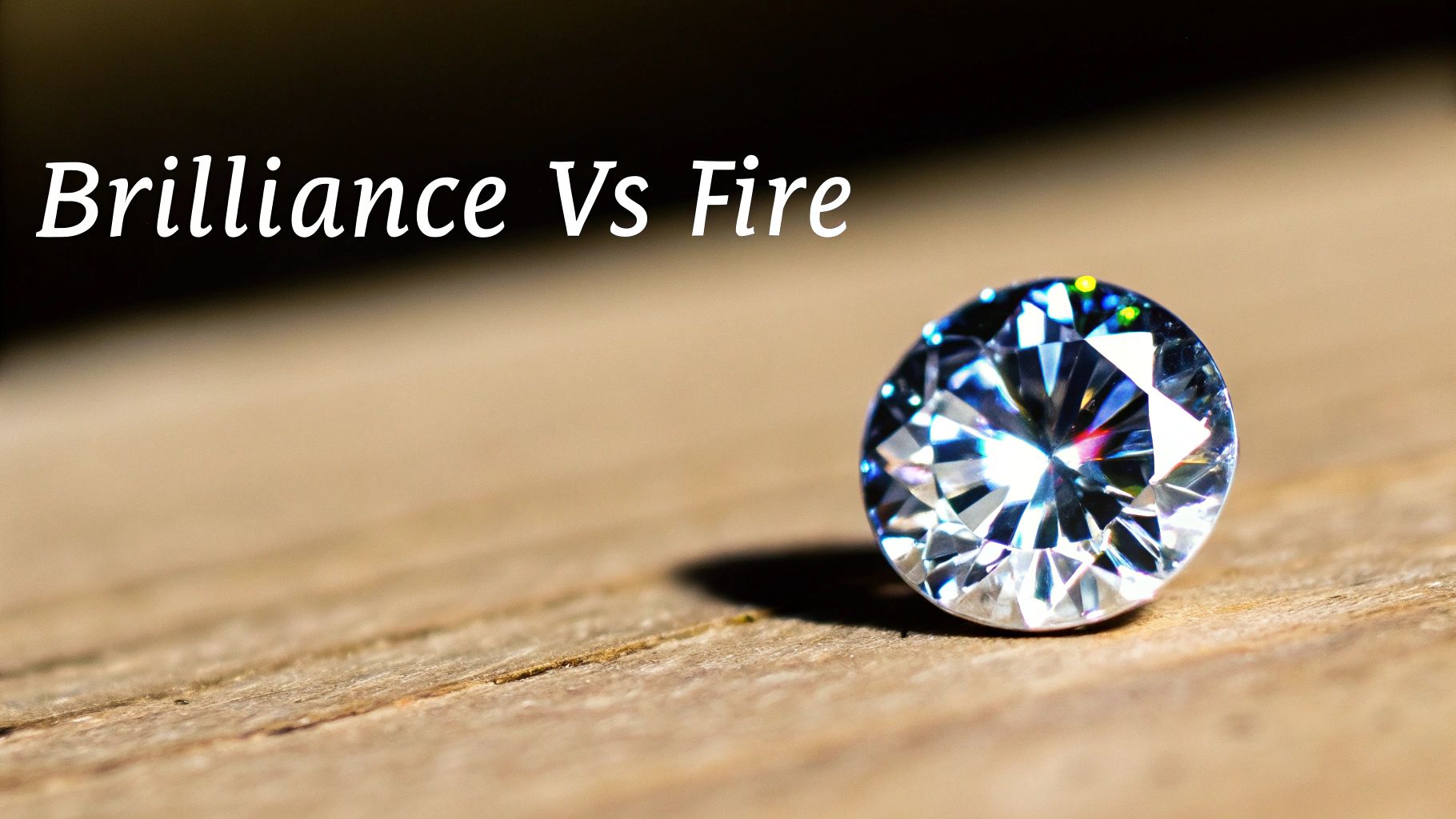
These three elements come together to create that mesmerising flash we all love:
- Brilliance: Think of this as the pure white light that shoots back to your eye. A stone with high brilliance looks incredibly bright, crisp, and vivid.
- Fire: This is the magic. It’s when light splits into a rainbow of spectral colours, creating those stunning flashes you see as the stone moves.
- Scintillation: This is the dynamic "twinkle"—the captivating play of light and dark across the stone’s facets as it moves.
Every stone strikes a unique balance between these properties, giving it a distinct personality.
The Fiery Character of Moissanite
Moissanite is famous for one thing above all else: its incredible fire. Because it's made of silicon carbide, it has a much higher refractive index (2.65 to 2.69) than a diamond. What does that mean in plain English? It throws off intense, fiery flashes of rainbow light, earning it the nickname "disco ball effect."
This isn't a flaw; it's moissanite's signature. If you're someone who loves a vibrant, look-at-me sparkle that truly commands attention, the over-the-top fire of moissanite is a massive drawcard. It puts on a dazzling light show that’s simply impossible to miss.
That said, the intensity isn't for everyone. Some people find that in larger stones, the powerful rainbow flashes look a bit different from the classic diamond sparkle they’re used to.
The decision often comes down to a simple question: Do you prefer a dazzling explosion of rainbow colour, or a sophisticated balance of white and coloured light? Your answer will point you straight to either moissanite or a lab diamond.
The Classic Brilliance of a Lab Diamond
A lab-grown diamond is chemically pure carbon, just like a mined one, giving it a refractive index of 2.42. While that number is lower than moissanite's, it's the perfect sweet spot for achieving that iconic diamond sparkle—a stunning, harmonious balance between brilliance (white light) and fire (coloured light).
This perfect equilibrium is what gives a diamond its timeless, sophisticated look. It returns an immense amount of white light, making it look exceptionally bright, while still showing off elegant flashes of rainbow fire. The result is a crisp, deep, and nuanced sparkle that has been treasured for centuries.
When you look at a lab diamond, you’re seeing the exact same optical performance as the highest quality mined diamond, but with all the benefits of a modern, ethical origin.
Visualising Sparkle in Different Environments
To really wrap your head around the moissanite vs. lab diamond sparkle debate, it helps to picture them in the real world. How a stone looks under a jeweller's spotlights can be worlds away from how it performs in your day-to-day life.
-
In Direct Sunlight: This is where moissanite really performs. It will throw off spectacular, vibrant rainbow flashes, creating an unbelievably lively and colourful display. A lab diamond will also show fire, but its main feature will be an intense, brilliant white sparkle with more subtle, refined coloured flashes.
-
In a Dimly Lit Restaurant: In softer, moodier lighting, a lab diamond’s brilliance often steals the show. Its ability to grab and return even the smallest amount of light makes it appear bright and white, with gentle, elegant flickers of fire. Moissanite will still show its rainbow colours, but its overall brilliance might not look quite as crisp as a diamond's in low light.
-
Under Office Lighting: The fluorescent or LED lights you find in most offices can really highlight the differences. Moissanite will produce more frequent and broader flashes of colour. A lab diamond, on the other hand, will offer a more controlled sparkle, with a sharp contrast of light and dark facets that gives it a real sense of depth and structure.
Ultimately, there’s no "better" sparkle—only the one that speaks to your personal style. If your heart is set on the timeless, balanced brilliance that defines a diamond, a lab-grown option is the perfect choice. But if you’re captivated by a dynamic and fiery display of colour that makes a bold statement, moissanite is an unbeatable option.
Understanding Durability for Everyday Wear
An engagement ring is more than just a beautiful piece of jewellery; it’s a constant companion. You’ll wear it for decades, through every high, low, and ordinary moment. That’s why durability is one of the most practical things to consider when choosing between moissanite and a lab diamond. You need a stone that can handle real life without scratching or chipping.
The go-to standard for measuring a gemstone's hardness is the Mohs scale, which ranks minerals from 1 (the softest) to 10 (the hardest). This scale is all about scratch resistance—a vital detail for a ring that’s going to knock against desks, doors, and everything in between.
The Unmatched Hardness of a Lab Diamond
When it comes to hardness, nothing beats a diamond. Whether it’s grown in a lab or pulled from the earth, a diamond scores a perfect 10 on the Mohs scale. It’s the hardest natural substance known to man, making it incredibly resilient against scratches. This is precisely why diamonds became the traditional choice for engagement rings—they are built to last a lifetime.
A lab diamond offers the ultimate peace of mind. If you have a hands-on job—maybe you're a healthcare worker, an artist, or a busy parent—or just live an active life, its superior scratch resistance ensures your ring stays brilliant for years.
The Exceptional Resilience of Moissanite
While diamond may hold the top spot, moissanite is right on its heels. Clocking in at an impressive 9.25 on the Mohs scale, moissanite is the second-hardest gemstone you'll commonly find in jewellery. Its exceptional hardness means it’s more than capable of handling the rigours of daily life.
To put it in perspective, moissanite is significantly harder than other popular choices like sapphires (which score a 9) or emeralds (7.5-8). For almost everyone, moissanite's durability is more than enough for a ring you’ll wear every day.
While a lab diamond holds the title for absolute hardness, the difference in real-world performance is subtle. Moissanite's 9.25 rating means it will resist scratches from almost anything it encounters, offering fantastic durability for everyday wear.
Practical Implications for Chipping and Toughness
Hardness is all about resisting scratches, but we also need to talk about toughness. Toughness measures a stone's ability to resist chipping or breaking from a sudden impact. Both lab diamonds and moissanite are incredibly tough, but their internal structures give them slightly different responses to a sharp knock.
-
Lab Diamonds: Being pure carbon, diamonds have natural cleavage planes. While they are exceptionally tough, a hard hit at just the right angle can cause a chip. It's rare, but it’s a possibility, especially with cuts that have sharp points like a princess or marquise.
-
Moissanite: Made of silicon carbide, moissanite doesn't have these cleavage planes. Some experts argue this gives it a slight edge when it comes to resisting chips from an accidental blow.
At the end of the day, both stones are remarkably robust. When placed in a protective setting, like a bezel or a classic six-prong mount, the risk of chipping either stone becomes incredibly small. The decision really boils down to whether you prioritise the absolute scratch resistance of a diamond or the fantastic all-around durability and value of moissanite.
Talking Dollars and Sense: Price and Long-Term Value
Let’s be honest, for most people in Australia, the budget is a massive part of the conversation when picking a centre stone. The financial side of the moissanite vs. lab diamond debate is where you'll find some of the biggest differences, and it’s not just about the initial price tag. It's about understanding what you're paying for and how each stone’s value is seen down the track.
This breakdown gives you a clear, no-nonsense look at the costs involved. It’s all about weighing up the immediate win of a lower price against what that means for its future value, so you can make a choice that genuinely fits your financial comfort zone.
The Upfront Cost: A Tale of Two Budgets
The most immediate and obvious difference is the price per carat. Moissanite delivers a serious amount of visual punch for an incredibly reasonable price, making it a fantastic option if you want to go big on size and sparkle without emptying your wallet.
Lab-grown diamonds, on the other hand, sit beautifully in the middle. They are dramatically more affordable than a mined diamond but still command a higher price than moissanite. This makes them perfect for anyone who has their heart set on a true diamond—with all its history and allure—but at a much more attainable price point.
To really see the difference:
- Moissanite: You could easily get a jaw-dropping 2-carat moissanite for a fraction of what you'd pay for a 1-carat lab diamond.
- Lab-Grown Diamond: A lab diamond might be 30-50% less than a mined diamond of the same quality, but it will still be several times more expensive than a moissanite of the same size.
This price gap gives you real flexibility. The money you save by choosing a moissanite could go towards a more elaborate, custom-designed setting, a stunning diamond pavé band, or simply be put aside for the honeymoon.
Thinking About Long-Term and Resale Value
When we talk about long-term value, it’s crucial to have the right perspective. Neither moissanite nor lab-grown diamonds are financial investments in the same way as gold or real estate. Their real value is in their beauty and the meaning they carry. That said, there's a clear difference in their resale potential, which really comes down to how the market views them.
Right now, lab-grown diamonds hold onto a higher percentage of their original value, simply because they have a more established resale market. Since they are chemically real diamonds, they're appraised, bought, and sold within the existing diamond industry. This gives their value a more predictable, though still depreciating, path over time.
Moissanite has a much smaller and less formal secondary market. While its beauty and toughness are lifelong, its monetary resale value is significantly lower than what you paid for it. People buy moissanite for its incredible look and smart price, not as a financial asset.
The Bottom Line: If holding onto a higher percentage of your stone's monetary value is a priority, a lab diamond is the better choice. If you'd rather maximise your initial budget for size and sparkle and aren't worried about resale, moissanite is an unbeatable option.
What Does the Public Think?
The distinction between moissanite and lab-grown diamonds in Australia isn’t just about price; it’s shaped by public perception. A 2023 consumer study from the Australian Jewellery Council found that while 71% of Australians couldn't tell the difference between a top-quality moissanite and a lab diamond in a side-by-side comparison, they thought about their value very differently.
The study showed 54% of Australians linked lab diamonds with prestige, while only 29% said the same for moissanite. This perception gap has a direct impact on resale potential. The report noted lab diamonds typically retain 60–70% of their value after five years, whereas moissanite holds around 30–40%. You can dive deeper into these trends in the full moissanite vs diamond report.
This data shows just how much market positioning matters. Lab diamonds have the advantage of being graded by the same respected institutions that certify mined diamonds (like GIA and IGI), which gives them a recognised stamp of value. Moissanite is graded for its own quality, but it doesn't have that same universal certification system, which can make buyers in the second-hand market a little more hesitant. Ultimately, your choice comes down to what you value more personally—the timeless cachet of a diamond or the brilliant, budget-savvy alternative that moissanite represents.
Ethical Sourcing and Environmental Impact
For today's buyer, the story behind a gemstone is just as important as its sparkle. When you're weighing up moissanite vs lab diamond, you can rest easy knowing both offer a clear conscience. They stand as responsible and ethical choices, sidestepping the controversies tied to traditional diamond mining entirely.
Choosing either of these lab-created gems means you avoid the dark side of the industry—concerns like conflict minerals, exploitative labour, and the massive environmental damage from large-scale mining are simply not part of their story. Instead, you get a beautiful stone with a transparent, traceable origin from a controlled laboratory.
The real advantage here is certainty. With a lab-created stone, you have an absolute guarantee that your jewellery isn't funding human rights abuses or environmental destruction. That kind of peace of mind is priceless.
This shared ethical high ground is a huge reason why so many Australians are now looking beyond mined stones.
Comparing Environmental Footprints
While both are miles ahead of mining in terms of sustainability, their creation processes aren't identical. The main difference comes down to the energy needed to replicate the intense conditions where gemstones form.
- Lab-Grown Diamonds: These are made using one of two methods—High-Pressure High-Temperature (HPHT) or Chemical Vapor Deposition (CVD). Both processes are incredibly energy-intensive because they have to mimic the extreme heat and pressure found deep within the earth.
- Moissanite: Creating silicon carbide, the compound that makes up moissanite, also takes a lot of energy. However, the process is generally less demanding than what’s required for lab diamonds, often resulting in a slightly smaller carbon footprint.
It's important to remember that this is a fast-moving field. Many labs are now switching to renewable energy and constantly refining their techniques to be more efficient. The sustainability gap between the two is getting smaller all the time.
The Rise of Sustainable Choices in Australia
The move towards ethical jewellery in Australia isn't just a fleeting trend; it’s a fundamental shift in how we shop. Growing awareness around sustainability has ignited the lab-grown diamond market. A 2023 report captured this perfectly, revealing that 62% of Australians surveyed would consider a lab-grown diamond for an engagement ring, pointing specifically to its lower environmental impact.
The numbers back this up. The same report noted that lab-grown diamonds now account for about 15% of all diamond jewellery sales in Australia. That's a massive jump from just 5% in 2018, highlighting how much our priorities have changed. Forbes has also covered how the market for lab-grown diamonds is surging.
Ultimately, whether you lean towards the classic allure of a lab diamond or the fiery brilliance of moissanite, you're making a responsible choice. You're supporting an industry that champions ethical practices and is committed to a more sustainable future, ensuring your symbol of love doesn't come at a cost to people or the planet.
How to Make Your Final Decision
When it comes right down to it, choosing between these two incredible gems is a personal one. What do you truly value most in a piece of jewellery? We've looked at sparkle, durability, and cost, but the best decision will always come back to your own budget, style, and what feels right for you. There’s no single "better" option—only the one that’s perfect for your story.
Think of it as a balance between desire and practicality. Are you dreaming of a large, spectacular stone that turns heads, or is the enduring legacy of a diamond more meaningful to you? Both moissanite and lab-grown diamonds offer a beautiful, ethical way to create a ring you'll love for a lifetime.
For Those Who Prioritise Sparkle and Size
If getting the biggest, most brilliant stone for your budget is the goal, moissanite is the undeniable front-runner. Its unique optical properties produce that incredible rainbow fire, giving you a much larger, more impressive stone than a diamond for the same price. This often frees up your budget, allowing you to invest in a more detailed setting or a stunning wedding band to match.
It’s no surprise that moissanite has really taken off in Australia. A 2022 survey found that 38% of Australians thinking about engagement rings were seriously considering moissanite, mainly driven by the value. We saw sales grow by 27% year-on-year between 2020 and 2022, proving a clear trend towards affordable luxury. You can read more about moissanite's growing popularity in Australia.
Choose Moissanite If: You want to maximise the size and sparkle of your stone without stretching your budget. You’re drawn to a vibrant, colourful fire and appreciate making a smart financial choice.
For Those Who Prioritise Tradition and Durability
If you love the classic, crisp brilliance of a real diamond and what it symbolises, then a lab-grown diamond is the perfect fit. It is, in every sense, a true diamond—sharing the exact same chemical, physical, and optical makeup as its mined counterpart. That includes a perfect 10/10 hardness score on the Mohs scale, offering complete peace of mind for everyday wear.
This choice also touches on long-term value. While neither should be seen as a financial investment, a lab diamond does hold its value better in the current resale market, supported by certifications from trusted bodies like GIA and IGI.
This decision tree can help you see how your personal values guide you toward the right ethical choice for you.
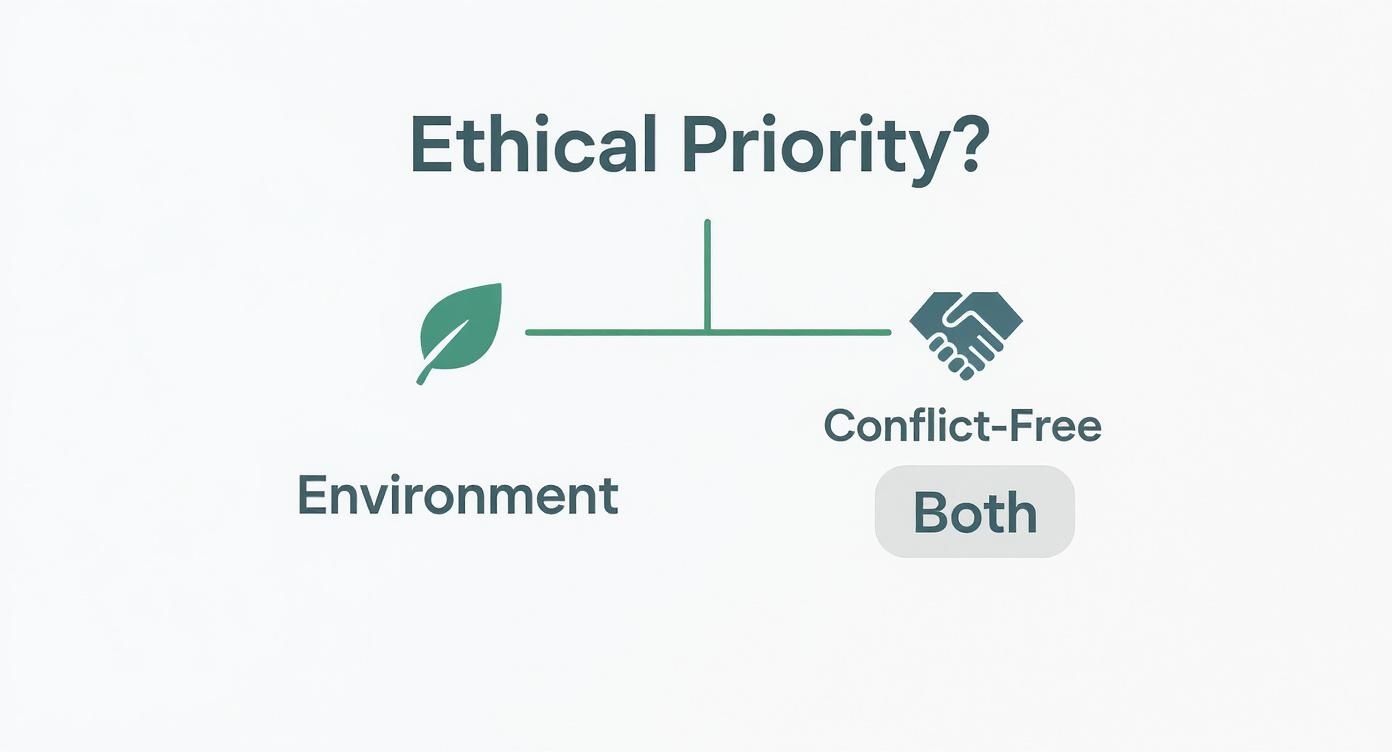
Both stones are brilliant, conflict-free options. The main takeaway here is that if specific environmental concerns are top of mind, lab diamonds currently have a slight edge.
Choose a Lab Diamond If: The prestige and authenticity of owning a real diamond matter to you. You prefer its classic, balanced sparkle and want the absolute toughest gemstone available.
Ultimately, the best choice in the moissanite vs lab diamond debate is the one that speaks to you. Here at Daniel Fine, we specialise in bringing your vision to life, whether that’s with the fiery brilliance of a moissanite or the timeless elegance of a lab diamond. We’ll work with you to customise a piece that not only looks incredible but perfectly reflects your story.
Frequently Asked Questions
When you're weighing up moissanite against a lab diamond, a few questions always seem to pop up. Getting clear, honest answers is the key to feeling truly confident in your decision. Here are the most common queries we get from our clients right here in Australia.
Can People Tell the Difference Between Moissanite and a Lab Diamond?
To the naked eye, it's incredibly difficult to tell them apart, especially with the high-quality stones we work with today. In day-to-day life, they look almost identical.
The one real giveaway is the sparkle. Moissanite has this intense, fiery rainbow flash—some call it a "disco ball" effect—which is absolutely stunning. A lab diamond, on the other hand, gives off that classic, balanced sparkle you'd expect, a beautiful mix of white light (brilliance) and flashes of colour (fire).
A professional jeweller with a loupe can spot the difference, of course. But will your friends and family? It's highly unlikely. The distinction is subtle enough that most people will simply see a beautiful, sparkling stone on your finger.
Does Moissanite Get Cloudy Over Time?
No, moissanite will never get cloudy, change its colour, or lose its sparkle. It's an incredibly stable gemstone, so its beautiful optical properties are there to stay for good.
What can happen, just like with any piece of jewellery you wear often, is that it can pick up a bit of grime. Everyday things like lotions, oils from your skin, and general dirt can build up and temporarily dull its shine.
But that's an easy fix. A quick clean with some mild soap, warm water, and a soft toothbrush will bring it right back to its original fiery brilliance, looking just as amazing as the day you first put it on.
Is a Lab Diamond Considered a Real Diamond?
Yes, without a doubt. A lab-grown diamond is 100% a real diamond. It’s not a simulant or a look-alike; it has the exact same makeup as a diamond that comes out of the ground.
Think of it this way: a lab diamond shares the identical chemical, physical, and optical properties of a mined diamond. The only thing that separates them is their origin story—one was created in a high-tech lab, the other deep within the Earth's crust.
Top gemological labs like GIA and IGI even certify lab diamonds using the very same rigorous 4Cs grading standards (Cut, Colour, Clarity, and Carat) they use for mined diamonds. That's the official stamp of approval on their authenticity and quality.
Which Stone Is Better for a Custom Engagement Ring?
Honestly, both moissanite and lab diamonds are brilliant choices for a custom engagement ring. They're both tough enough to handle daily wear, so the "better" option really comes down to your personal priorities for the design and what you want to spend.
-
Go for moissanite if you're dreaming of a large, jaw-dropping centre stone. Its attractive price point means you can free up more of your budget for the finer details, like a more intricate setting or adding extra diamonds to the band.
-
A lab diamond is your stone if the classic appeal and authenticity of a true diamond are what matter most. It's the perfect fit when that timeless diamond prestige and its iconic, balanced sparkle are the heart of your dream ring.
At Daniel Fine, we're all about bringing your unique vision to life, whether that's with a stunning moissanite or a classic lab diamond. We'd love to show you how our custom design process works and help create a piece that tells your story perfectly. Start your bespoke jewellery journey with us today.