In Australia, and many other Western cultures, there's a clear tradition: the wedding ring goes on the fourth finger of the left hand. This custom isn't random; it's a practice steeped in history, stretching all the way back to the ancient Romans.
Unpacking the Tradition Behind Men's Wedding Rings
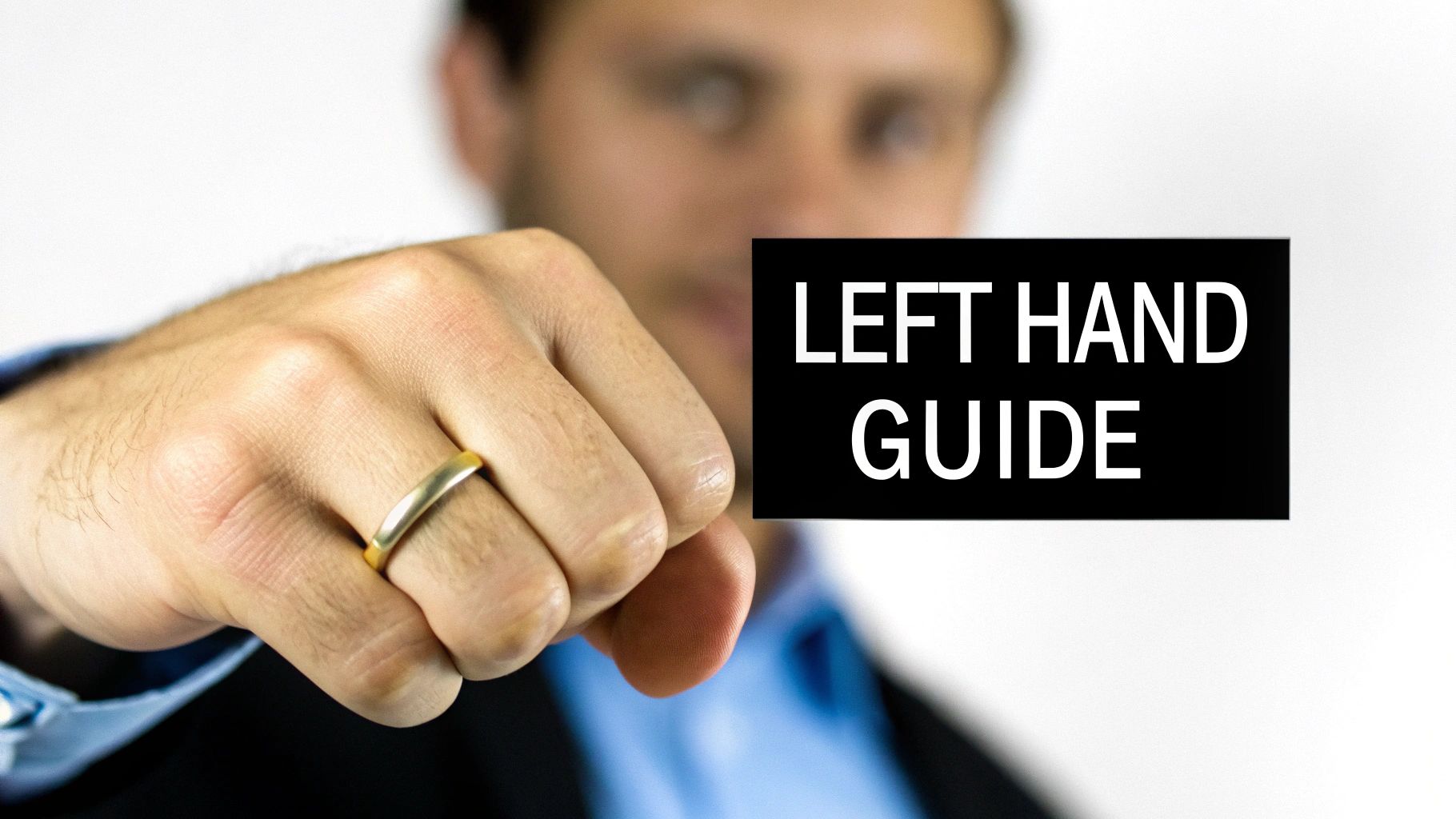
The Romans believed in what they called the vena amoris, or the 'vein of love'. They were convinced a special vein ran directly from the fourth finger on the left hand straight to the heart. While we now know that's not anatomically correct, the romantic symbolism was just too good to let go. It has stuck around for centuries.
Interestingly, the tradition of men wearing wedding rings is much more recent than you might think. It only really took off in the mid-20th century. The practice was largely popularised by soldiers during World War II, who wore rings as a tangible, comforting reminder of their wives and families waiting back home.
Today, that simple band of metal is a powerful symbol of commitment and a core part of modern marriage. Here in Australia, it's an overwhelming custom. A 2018 survey revealed that around 87% of married men wear a wedding ring, and a massive 92% of them choose that traditional left ring finger. You can dive deeper into these insights into men's wedding ring traditions to see how the trend has evolved.
A Quick Guide to Common Choices
But what if wearing a ring on your left hand just doesn’t feel right for you? It's important to remember that tradition is a guide, not a rule. Your personal comfort, cultural background, and even your job can play a big part in deciding what works best.
Before we get into the nitty-gritty of global customs and practical tips, here’s a quick summary of the most common choices men make.
Men's Wedding Ring Finger Quick Guide
| Finger/Hand | Primary Reason | Commonly Practised By |
|---|---|---|
| Left Ring Finger | Ancient "Vena Amoris" (vein of love) tradition and modern Western custom. | Men in Australia, the US, UK, and much of Western Europe. |
| Right Ring Finger | Symbolises honour and strength in certain religious and cultural traditions. | Men in some Eastern European, Orthodox Christian, and Latin American countries. |
| Non-Dominant Hand | A practical choice to protect the ring from daily wear, damage, and scratches. | Individuals in hands-on professions or those who are left-handed. |
As you can see, while the left hand is the most common choice, it's far from the only one. Practicality and cultural heritage offer compelling reasons to consider other options.
Why the Left Hand Isn't Always the Answer
In Australia, we're all pretty used to seeing a wedding ring on a man's left hand. But that's far from the only way to do it.
This tradition has a surprisingly romantic, if not entirely scientific, backstory. It goes all the way back to the ancient Romans and their belief in the vena amoris, or the 'vein of love'. They believed a special vein connected the fourth finger of the left hand directly to the heart. It’s a lovely thought, isn’t it? While modern medicine has shown us that’s not quite how our circulatory system works, the symbolism stuck. It became the go-to tradition in Western countries like Australia, the US, and the UK.
Where the Right Hand Rules
Once you look beyond our own backyard, you'll discover that for many, the right hand is the natural home for a wedding band. The choice of which finger to use is a beautiful tapestry of different cultural and religious beliefs.
In many Eastern Orthodox Christian countries, like Greece and Russia, the ring is traditionally worn on the right hand. This isn't just a random choice; it's steeped in religious meaning, where the right side is often seen as the side of strength, authority, and God's favour.
It’s not just a religious thing, either. Cultural traditions in other parts of the world also favour the right hand:
- India: It’s common for married men to wear their ring on the right hand, which is generally considered the more auspicious or 'proper' hand.
- Germany and Austria: A fascinating tradition here is for couples to wear their engagement rings on the left hand, then ceremoniously move them over to the right hand once they’re married.
- Spain and Parts of Latin America: The right hand is also a very common choice for wedding rings.
It just goes to show there’s no single "correct" answer. The right finger is all about what the symbol means to you and where you come from.
The hand you choose tells a story. For some, it’s a story of ancient romance linked to the heart. For others, it’s a tale of faith, heritage, and the symbolic power passed down through generations.
Global Traditions Right Here in Australia
Australia’s multicultural fabric means these global traditions are alive and well right here. A 2020 study showed that while 91% of married men in Australia stick to the left ring finger, there's a significant portion who don't. The research pointed out that men from Greek or Eastern European backgrounds often wear their rings on the right hand, a proud nod to their Orthodox Christian heritage. You can get a deeper sense of how these traditions influence ring placement in Australia and see just how diverse our local customs have become.
At the end of the day, what matters most is the meaning you and your partner place on the ring. Whether you’re drawn to the romantic idea of the vena amoris on your left hand or you want to honour a family tradition on your right, your wedding ring is a deeply personal symbol of your commitment.
Choosing a Ring Placement That Fits Your Life
While cultural traditions give us a fascinating starting point, the day-to-day reality of your life is just as important. It’s all about finding that sweet spot where timeless symbolism meets modern practicality. After all, a ring should celebrate your commitment, not get in the way of your work or hobbies.
For most blokes, the simplest and most effective strategy is to wear the ring on their non-dominant hand. So, if you’re right-handed, that means popping it on your left. This one decision can dramatically reduce the amount of wear and tear the ring will face from writing, lifting, or swinging a hammer.
Safety and Professional Considerations
For some jobs, wearing a metal ring isn't just impractical—it's downright dangerous. A conductive metal ring is a serious hazard for electricians. Mechanics and construction workers risk getting their ring snagged on machinery, which can lead to a nasty injury called ring avulsion.
Surgeons and other healthcare workers also have to think about hygiene, as traditional rings can be a hiding spot for bacteria. In these cases, you can still show your commitment in other ways.
- Silicone Rings: These have become a really popular and safe alternative. They’re flexible, non-conductive, and designed to break away under pressure, preventing serious injury.
- Wear It on a Necklace: A simple chain can keep your ring close to your heart without it being on your hand during work hours.
- Leave It Off at Work: Plenty of guys simply take their ring off before a shift and put it back on afterwards. The symbolism is still there, even if the ring isn’t on your finger 24/7.
The image below gives a great visual of how deeply heritage can influence the initial choice between the left and right hand.

This shows how Western traditions often point to the left hand, while Eastern Orthodox traditions lean towards the right. But remember, your own lifestyle and profession add another crucial layer to this decision.
Making the Final Call
Ultimately, the goal is to find a solution that feels right for you and your partner. Don't think of it as a strict rule. It’s a personal preference guided by a few key, practical factors. There is no single "correct" answer, only the one that best suits your life.
The best place for your wedding ring is where it safely and comfortably represents your marriage. For many men, this means adapting tradition to fit the demands of their job and daily activities.
Choosing which finger to wear your wedding ring on is really a balancing act between tradition and your own circumstances. By thinking about your dominant hand and any workplace safety needs, you can honour your commitment in a way that’s both meaningful and practical. It’s about making sure your symbol of love is ready for all of life’s adventures.
Finding the Perfect Ring Profile and Material
So, you’ve picked which finger to wear your wedding ring on. Great! Now for the fun part: choosing the ring itself. This isn't just another piece of jewellery; it’s something you'll likely wear every single day. That means its comfort, feel, and durability are just as vital as what it represents.
Making the right call really boils down to two key things: the ring’s profile and its material.
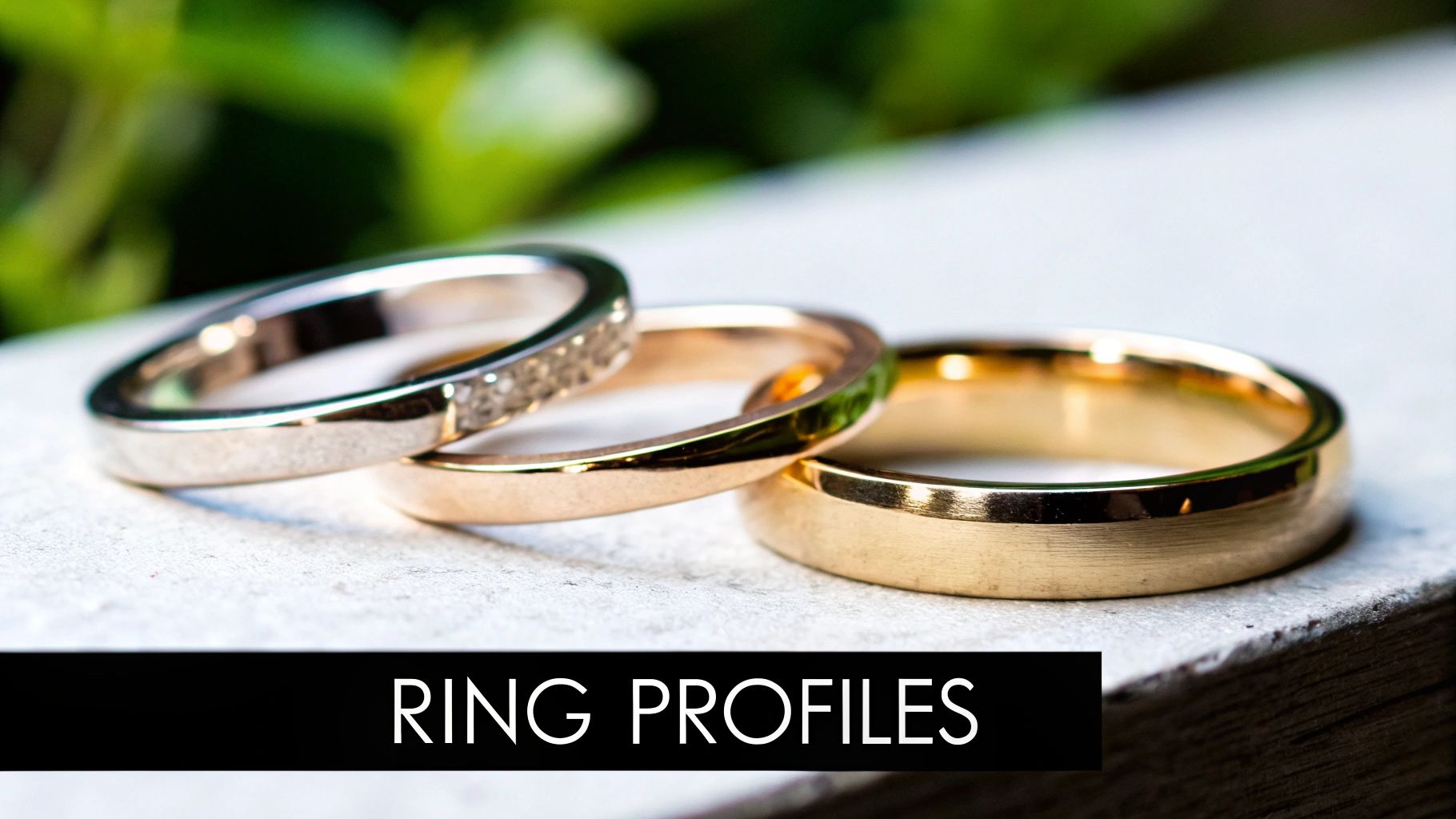
Think of a ring's profile as its shape if you were to slice right through it. This cross-section is what determines how the ring sits on your finger and feels against the ones next to it. Getting this right is the secret to long-term comfort, especially if you’re not used to wearing rings.
Understanding Ring Profiles
Diving into ring profiles might sound a bit technical, but it’s actually pretty straightforward. Each style offers a completely different feel, so it’s all about finding what feels most natural on your hand.
- Court Profile: This is hands-down the most popular and comfortable pick for most guys. It’s gently rounded on both the inside and outside, a bit like a smooth, worn-down pebble. With no sharp edges, it’s a classic for a reason and ideal for all-day, everyday wear.
- D-Shaped Profile: Picture a court profile sliced in half. A D-shaped ring is totally flat on the inside, sitting flush against your skin, while the outside is curved. This gives you a traditional look with a solid, substantial feel.
- Flat Profile: If you’re after a modern, bold look, this is it. The profile is completely flat on all sides, creating a contemporary, architectural vibe. Just be aware that its distinct edges mean it’s definitely one you should try on first to see if it’s comfortable for you.
The real goal here is to find a ring you almost forget you’re wearing. The profile is what delivers that "second skin" comfort, making your ring feel like a natural part of your hand.
Choosing the Right Material for Your Lifestyle
The metal or material you choose for your wedding ring dictates everything—its look, weight, toughness, and price tag. The best guide for this decision? Your lifestyle. An office worker has very different day-to-day demands on their hands than a tradie or a serious athlete.
Classic precious metals like gold (in yellow, white, or rose) and platinum are timeless for a reason. Gold is the traditional choice; it’s relatively soft, which makes it easy to resize down the track, but also means it's more likely to show scratches. Platinum, on the other hand, is much denser, heavier, and exceptionally durable. It has a premium feel and is naturally hypoallergenic.
For blokes with active lifestyles or hands-on jobs, some of the alternative metals are a fantastic choice. Titanium is incredibly strong yet feels surprisingly light on the finger, making it both comfortable and very scratch-resistant. In a similar vein, tungsten carbide is one of the toughest materials out there—it’s virtually impossible to scratch. The trade-off is that it’s brittle, so it can crack or shatter under a severe impact.
A modern favourite, especially when safety is a concern, is silicone. These flexible, non-conductive bands are perfect for gym-goers, electricians, or anyone working with machinery. They're an affordable and practical backup to wear when your precious metal ring isn't suitable.
Choosing a material that can stand up to your daily grind is key. To help you weigh up the options, here’s a quick look at the most common choices.
Comparison of Common Men's Wedding Ring Materials
This table breaks down the most popular materials, giving you a clearer picture of their unique properties and who they suit best.
| Material | Durability | Feel & Weight | Best For |
|---|---|---|---|
| Gold | Moderate | Classic weight, soft feel | The traditionalist seeking a timeless look that can be easily resized. |
| Platinum | Very High | Heavy and substantial | Someone wanting a premium, hypoallergenic, and extremely durable ring. |
| Titanium | High | Extremely lightweight | Active individuals or those who dislike the feeling of heavy jewellery. |
| Tungsten | Very High | Heavy and dense | Men wanting maximum scratch resistance for a hands-on profession. |
| Silicone | Low | Ultra-light and flexible | Athletes, tradies, or as a safe, practical alternative for any activity. |
Ultimately, whether you lean towards the timeless elegance of platinum or the practical toughness of tungsten, the right material is the one that fits seamlessly into your life.
Exploring Modern Trends Like Stacking and Engagement Rings
While the classic plain band on the left ring finger is a timeless choice, today's grooms are increasingly rewriting the rulebook. Personal expression is now front and centre, with trends like men's engagement rings and ring stacking gaining serious momentum. It's no longer about just a single ring; it's about curating a look that tells your personal story.
One of the biggest shifts we're seeing is the rise of the men's engagement ring. This trend is all about celebrating the proposal as a genuinely shared moment, with both partners wearing a symbol of their commitment in the lead-up to the wedding day.
The Growing Popularity of Men's Engagement Rings
The idea of an engagement ring for men has definitely moved from a novelty to a meaningful new tradition. In Australia, the uptake has been particularly noticeable, with one 2021 report showing a 42% rise in purchases over the last decade.
When it comes to wearing them, 78% of men choose the left ring finger, while 18% wear it on their right hand, often to keep it separate from where their future wedding band will go. You can explore more insights into men's engagement rings to get a feel for the different styles out there.
So, how do you actually wear one? There are a couple of popular approaches:
- On the Left Hand: Many guys wear it on their wedding ring finger and simply move it over to their right hand during the ceremony.
- On the Right Hand: Others prefer to wear it on their right ring finger from the get-go, leaving the left hand completely free for the wedding band.
Mastering the Art of Ring Stacking
Beyond just the engagement ring, stacking multiple rings on the same finger is a seriously stylish way to personalise your look. It's all about combining your wedding band with other meaningful pieces—think of it as building a collection that represents your journey.
You could pair your wedding band with your engagement ring, a family signet ring, or another band that marks a special anniversary. The key is to find a combination that feels both balanced and comfortable for you. When deciding which wedding ring finger men should use for a stack, the traditional left hand is a great starting point, as it immediately grounds the whole look with symbolic meaning.
Stacking isn't just a fashion choice; it’s a form of storytelling. Each ring adds a new chapter, creating a collection that is deeply personal and visually striking.
A Few Lingering Questions Answered
Even after getting the hang of the traditions and practical side of things, you might still have a few questions floating around. Let's tackle some of the most common queries we hear from guys, so you can wear your ring with total confidence.
Think of this as the final piece of the puzzle, clearing up any lingering confusion about everything from less-common finger choices to what happens when life, well, happens and your ring size changes.
Can I Wear My Wedding Ring on My Thumb or Pinky?
You absolutely can. While tradition points to the fourth finger, the ring's symbolism is ultimately defined by you and your partner, not by a specific rulebook. It's your commitment, your style.
Historically, different fingers carried different meanings. Thumb rings often suggested power and influence, while a pinky ring might have been tied to a family crest or a professional guild. If you pick one of these fingers because it’s more comfortable, fits your style, or just feels right, go for it.
The only thing to keep in mind is that people might not instantly recognise it as a wedding band. But that’s a minor detail. What truly matters is what it represents to you and your partner.
What Should I Do if My Wedding Ring No longer Fits?
Don't panic—this is incredibly common. Our finger size naturally changes over the years due to everything from weight shifts and exercise to simple ageing. If your ring is too snug or spinning around, your best bet is to pop into a professional jeweller.
For rings made from classic metals like gold, platinum, or palladium, resizing is usually a straightforward job. A jeweller can either stretch the band slightly or, for bigger adjustments, add or remove a small piece of metal to get that perfect fit back.
The story is different for alternative metals, though. Materials like tungsten carbide or titanium cannot be resized because of how incredibly hard they are. This is a crucial point to remember when you're buying. Many jewellers who sell these rings offer lifetime sizing exchange programs to get around this, which is a fantastic feature to look for.
How Do I Wear Both an Engagement Ring and a Wedding Ring?
With more men wearing engagement rings, this question comes up a lot. You've got a few great options for wearing both, letting you create a look that feels authentic to you.
- Stack Them Up: The most popular approach is to wear both on the same finger, usually the left ring finger. The wedding band traditionally goes on first, sitting closest to your heart.
- Split Them Up: Another great choice is to wear your wedding band on the left hand and the engagement ring on your right. This gives each ring its own spotlight.
- Join Them Together: For a totally seamless look, a jeweller can permanently solder the two rings together, making them one solid piece.
A common bit of ceremony logistics is to temporarily move the engagement ring to your right hand before you walk down the aisle. This leaves the wedding finger clear for the main event, and you can simply slip the engagement ring back on top afterwards.
Your wedding ring is a symbol of your marriage, but how you wear it is a symbol of your personal style. Combining rings allows you to tell a bigger story about your journey as a couple.
Is It Okay to Not Wear a Wedding Ring at All?
Yes, it’s completely fine. A wedding ring is a powerful symbol, but it's a personal choice, not a legal requirement or a measure of your commitment.
Plenty of men choose not to wear one for perfectly good reasons, such as:
- Workplace Safety: A must for anyone working with machinery, electricity, or heavy equipment.
- Sensory Issues: Some people just can't get used to the feeling of wearing jewellery.
- Metal Allergies: A reaction to certain metals can make wearing a ring impossible.
- It’s Just Not Your Thing: Simple as that. It might not fit your personal style.
The key here is open communication. As long as you and your partner are on the same page, that's all that matters. Some couples even choose alternative symbols of their bond, like a matching tattoo, a watch, or another piece of shared jewellery.
At Daniel Fine, we believe your jewellery should be as unique as your story. Whether you're looking for the perfect wedding band, a custom engagement ring, or another piece to mark a special milestone, our team is here to help you create something that lasts a lifetime. Explore our bespoke creations and begin your unique jewellery journey.