So, what should you expect to pay for ring resizing? In Australia, the cost generally falls somewhere between $75 and $200 for a standard adjustment. Of course, a simple tweak on a plain gold band will sit at the lower end of that scale, while a more intricate ring or a tricky metal like platinum will push the price higher.
A Guide to Ring Resizing Prices in Australia
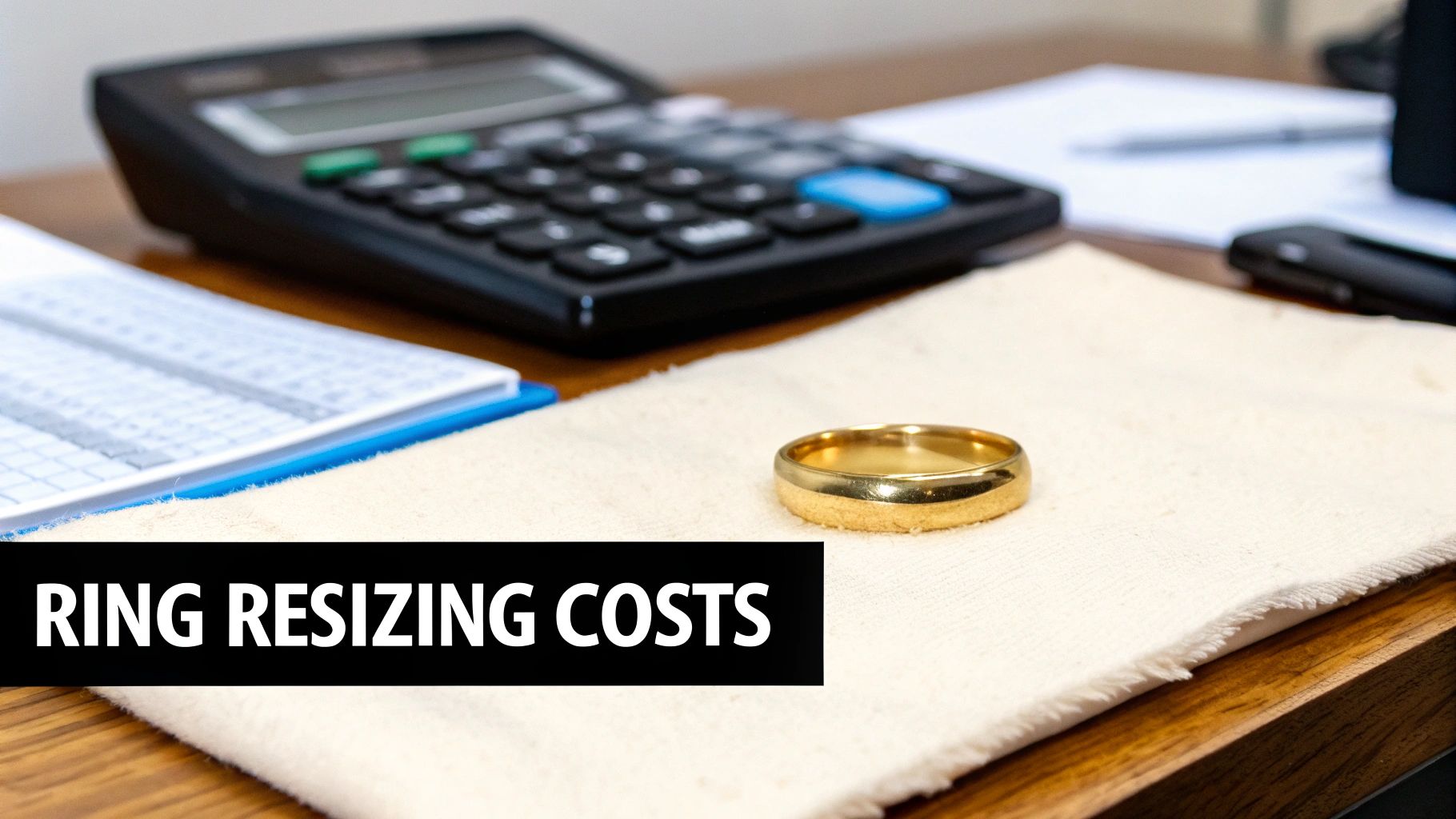
Trying to figure out how much it will cost to resize a ring you love can feel a bit like guessing in the dark. But there’s a real logic behind it. The final quote you get from a jeweller isn’t just a random number; it’s a careful calculation of the time, skill, and precious metals needed to do the job perfectly, leaving no trace of the work behind.
For the most part, resizing costs have stayed pretty consistent here in Australia. Most experienced jewellers will charge between $75 and $200 for a typical job. If you're looking at a straightforward gold or silver wedding band that needs to go up or down a size or two, you can expect to pay around $130. Anything more complex will naturally cost more, often pushing past the $200 mark. You can learn more about what to expect from a jeweller and ring resizing costs in Australia.
Comparing Typical Resizing Costs
To give you a clearer picture, the type of metal is one of the biggest factors driving the price. Different metals have different personalities. Platinum, for instance, is a tough material that demands specialised tools and much higher temperatures to work with, which means more intensive labour and a higher cost.
It's a simple rule of thumb: making a ring larger almost always costs more than making it smaller. Sizing up means the jeweller has to carefully add a new piece of matching metal, which adds to both the material and labour columns on the final bill.
To help you get a better feel for the numbers, here’s a quick breakdown of estimated prices for the most common metals and ring styles. Think of this as a general guide—your ring’s unique design will always be the deciding factor in a final quote.
Estimated Ring Resizing Prices in Australia
This table provides a summary of typical cost ranges for resizing different types of rings based on common metals and complexity.
| Ring Type | Yellow/Rose Gold (9k-18k) | White Gold/Platinum | Notes |
|---|---|---|---|
| Plain Band (Simple) | $75 – $150 | $120 – $250 | Platinum and white gold (which needs fresh rhodium plating) are more expensive. |
| Ring with Stones | $100 – $200 | $150 – $300+ | Cost goes up with the number of stones and the complexity of their settings. |
Remember, these figures are a starting point. The true cost will always depend on an in-person assessment by a skilled jeweller who can see exactly what your beautiful ring needs.
Here is the rewritten section, designed to sound natural and human-written by an experienced expert.
What Goes Into the Cost of Resizing a Ring?
Ever wondered why there's no flat fee for resizing a ring? It’s because every ring has its own story and its own unique structure. Think of it like getting a suit tailored. Taking in the waist is one thing, but completely reshaping the shoulders of a lined jacket is a whole different ball game. The final quote for your ring resizing reflects that same reality—it’s a careful calculation of the jeweller's time, skill, and the materials needed.
Several key things come into play when we work out the price. Getting your head around these factors will help you understand the quote and appreciate the craftsmanship that goes into making your ring fit you perfectly again.
The Type of Metal
The metal your ring is made from is probably the single biggest factor in determining the price. Different metals have completely different personalities on the jeweller’s bench, and each one needs its own specific tools and techniques.
- Yellow and Rose Gold: These are usually the most straightforward metals to resize. They’re quite cooperative and respond well to the heat and soldering required, which generally keeps the costs down.
- White Gold: Resizing white gold has an extra step at the end. After the sizing is complete, the whole ring needs to be re-plated with rhodium to give it back that crisp, silvery-white lustre. That extra process adds to the final cost.
- Platinum: This is the premium option for a reason. Platinum is incredibly dense and has a much higher melting point than gold, so it demands specialised equipment and a lot more muscle to work with. It's a tougher job, which is why resizing a platinum ring is almost always the most expensive.
The difference in effort is significant. A platinum band can take a jeweller a good deal more time and concentration than a simple gold one, and that’s reflected directly in the price.
Going Up or Down in Size?
It might seem odd, but whether we’re making a ring bigger or smaller makes a real difference to the cost. In almost every case, making a ring larger costs more than making it smaller.
Sizing down is a process of removal. A jeweller will snip a tiny piece out of the band, bring the two ends together perfectly, and solder them shut. Then, it's all about cleaning and polishing until the join is completely invisible.
On the other hand, sizing up is a process of addition. We have to cut the band and add in a new piece of metal that’s a perfect match. This means you’re not just paying for the extra labour, but also for the cost of the added gold or platinum itself.
How Complex is the Ring's Design?
Finally, the design and construction of the ring play a massive part. A simple, plain wedding band? That’s about as straightforward as it gets, keeping the job at the lower end of the price range.
But as soon as you add complexity, the skill, time, and risk all go up. We have to consider things like:
- Band Width: A wide, chunky band naturally requires more work to reshape seamlessly than a delicate, thin one.
- Engravings or Patterns: If your ring has a detailed pattern or a personal engraving, the jeweller has to work with extreme care to preserve it. Often, the pattern needs to be re-finished or the engraving re-done by hand, adding to the time.
- Gemstones: This is where things can get really tricky. A ring with a lot of stones—especially if they’re set in a continuous channel or pavé style—is the most complex job of all. Each tiny stone might need to be checked and tightened, or even removed and reset, to ensure it doesn't get damaged by the heat and pressure of the resize. This is the kind of meticulous work that really separates a standard resize from a specialist repair.
The Cost of Resizing Engagement and Gemstone Rings
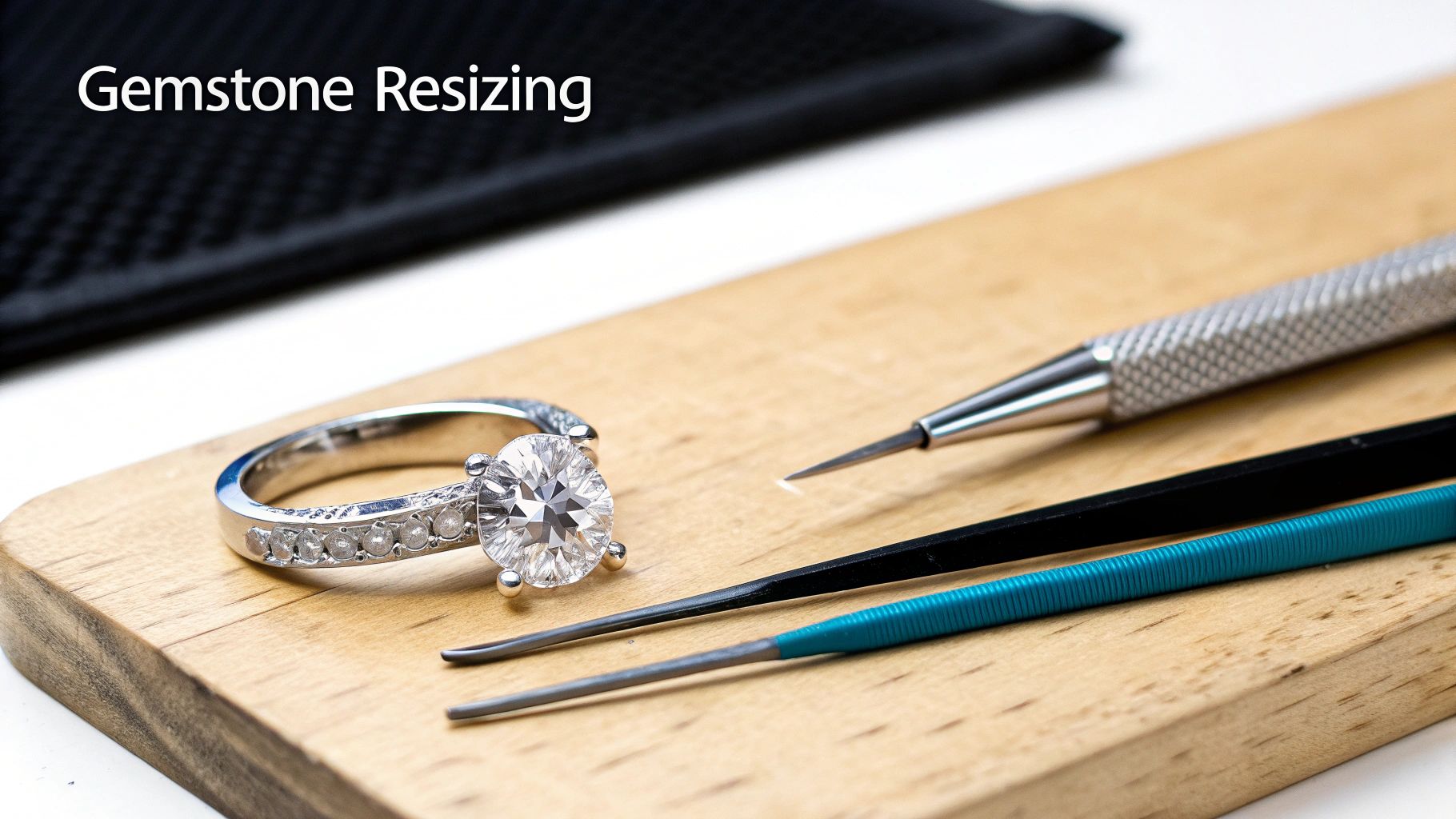
When a ring is set with a diamond or other precious gemstones, resizing it becomes a much more delicate operation. Think of a plain band like a simple brick wall—it's relatively straightforward to modify. An engagement ring, on the other hand, is more like a wall covered in an intricate mosaic. Every adjustment demands extreme care to protect the embedded artwork.
The presence of stones, especially diamonds, introduces a whole new level of complexity. Heat from soldering can damage certain gems, and even slightly changing the ring’s curve can loosen the prongs holding everything in place. That’s why a skilled jeweller has to approach these pieces with surgical precision, often needing to remove stones before starting and then perfectly resetting them afterwards.
How Different Settings Affect the Price
The style of your engagement ring has a huge impact on the time and skill needed to resize it properly. A classic solitaire is one thing, but a band that's completely covered in diamonds is a completely different ball game.
Here’s a look at common setting styles and how they influence ring resizing prices:
- Solitaire Rings: These are usually the easiest to resize. With just one main stone, the jeweller can work on the band without worrying about disturbing multiple settings. This helps keep the cost down.
- Halo Rings: That beautiful circle of small stones around the central gem adds complexity. The jeweller has to ensure the halo stays perfectly symmetrical and that none of those tiny stones pop loose as the band is reshaped.
- Pavé and Channel-Set Bands: These are often the most challenging and expensive to resize. The band is lined with small stones set tightly together, leaving very little plain metal to work on. Any change to the ring's curve can compromise the entire setting, forcing the jeweller to painstakingly check and tighten every single stone.
- Eternity Bands: A full eternity band, with stones all the way around, is notoriously difficult—and sometimes impossible—to resize with traditional methods. There’s simply no bare metal at the bottom to cut, making any adjustment a highly specialised job.
The rule of thumb is pretty simple: the more stones and the more intricate the setting, the more time, risk, and meticulous skill are involved. This is always reflected in the final cost to protect your treasured piece.
What to Expect for Gemstone Ring Resizing Costs
Because of all the extra work, resizing a ring with stones will always cost more than a plain band. For a fairly simple solitaire engagement ring, you can expect the average cost to be somewhere between $50 and $150.
For more complex designs like pavé, halo, or channel-set rings, the price usually starts in the $100 to $250 range and can climb higher depending on the specific ring. This price difference is all about the intensive labour required to protect your gems. A jeweller could spend hours carefully removing and resetting dozens of tiny stones just to ensure the ring’s beauty and structural integrity are perfectly preserved. You can find more details about the costs of resizing intricate rings on dianamjewels.com.
Ultimately, when you pay an expert to handle your engagement ring, you're not just paying to change its size. You're making an investment in preserving the craftsmanship and sentimental value of a piece that was made to last a lifetime.
What Actually Happens When a Jeweller Resizes Your Ring?
Ever wonder what goes on behind the scenes after you drop off your precious ring for resizing? It’s not magic, but it’s pretty close—a delicate dance of skilled craftsmanship and technical precision. The goal is to make that ring feel like it was custom-made for your finger, and it all starts with getting an exact measurement.
Once we know the perfect size, the real work begins. If your ring is too big, the jeweller makes a tiny, precise cut at the very bottom of the band (we call this part the shank). A small piece of metal is then carefully removed.
Making the Cut Invisible
With that little piece gone, the two fresh ends of the band are brought together. They have to be perfectly filed and aligned before being expertly soldered with a metal that perfectly matches your ring. It takes a very steady hand to pull this off without leaving a trace.
Making a ring larger is basically the reverse. The shank is cut, but this time, instead of removing metal, the jeweller adds a small, perfectly matched piece of gold, platinum, or whatever your ring is made of. This new section is then soldered into the gap, seamlessly expanding the ring.
Whether we’re adding metal or taking it away, the mission is always the same: make the join completely invisible. That’s the true sign of a job well done.
After being soldered, the ring is no longer a perfect circle. So, it's carefully placed on a tapered steel tool called a mandrel and gently hammered back into its round shape.
The Final Polish and How Long It All Takes
The last step is all about the finish. The jeweller meticulously files, sands, and polishes the worked-on area until any sign of the repair vanishes. If it's a white gold ring, it gets a fresh coat of rhodium plating to bring back that brilliant, mirror-like shine. When you get it back, it should look better than new.
So, what's the turnaround time for all this?
- Simple Resizing: A straightforward job, like a plain gold band, usually takes about 3 to 7 business days.
- Complex Jobs: If your ring is more complicated—think intricate settings, channel-set stones, or tough metals like platinum—it might take closer to 1 to 2 weeks.
Of course, things like the jeweller's current workload can affect the timeline. A good professional will always be upfront about the ring resizing prices and give you a clear completion date before they start, so you’re never left guessing.
When Resizing Is Not the Best Option
While resizing is a fantastic solution for most rings, it’s not always the right move. In fact, some rings simply can’t be resized in the traditional way without risking serious damage. Knowing when to look for alternatives is key to protecting the integrity of your cherished piece.
Certain designs are notoriously tricky. Take a full eternity band, for instance. With gemstones wrapping the entire way around, there’s simply no plain metal for a jeweller to work with. Cutting into the band would mean disrupting the stone settings, which could compromise the whole structure of the ring.
The metal itself can also be a major roadblock. Super-tough contemporary metals like tungsten, titanium, and stainless steel are incredibly popular for their durability, but that same strength makes them a nightmare to resize. They resist being cut, bent, and soldered, and most jewellers don’t have the highly specialised tools required. Trying to force it can actually shatter the ring.
Alternatives for Minor Adjustments
If your ring is just a touch too loose but can't be resized, don't worry. There are some clever, non-permanent solutions that work wonders for a slightly better fit.
- Sizing Beads: A jeweller can add two tiny metal beads on the inside of the band. These sit snugly against your finger, stopping the ring from spinning and feeling loose. It’s a simple, effective fix.
- Spring Inserts: This is a small, U-shaped metal strip that gets soldered inside the ring. It’s flexible, so it opens up to slide over your knuckle and then springs back to hold the ring securely in place.
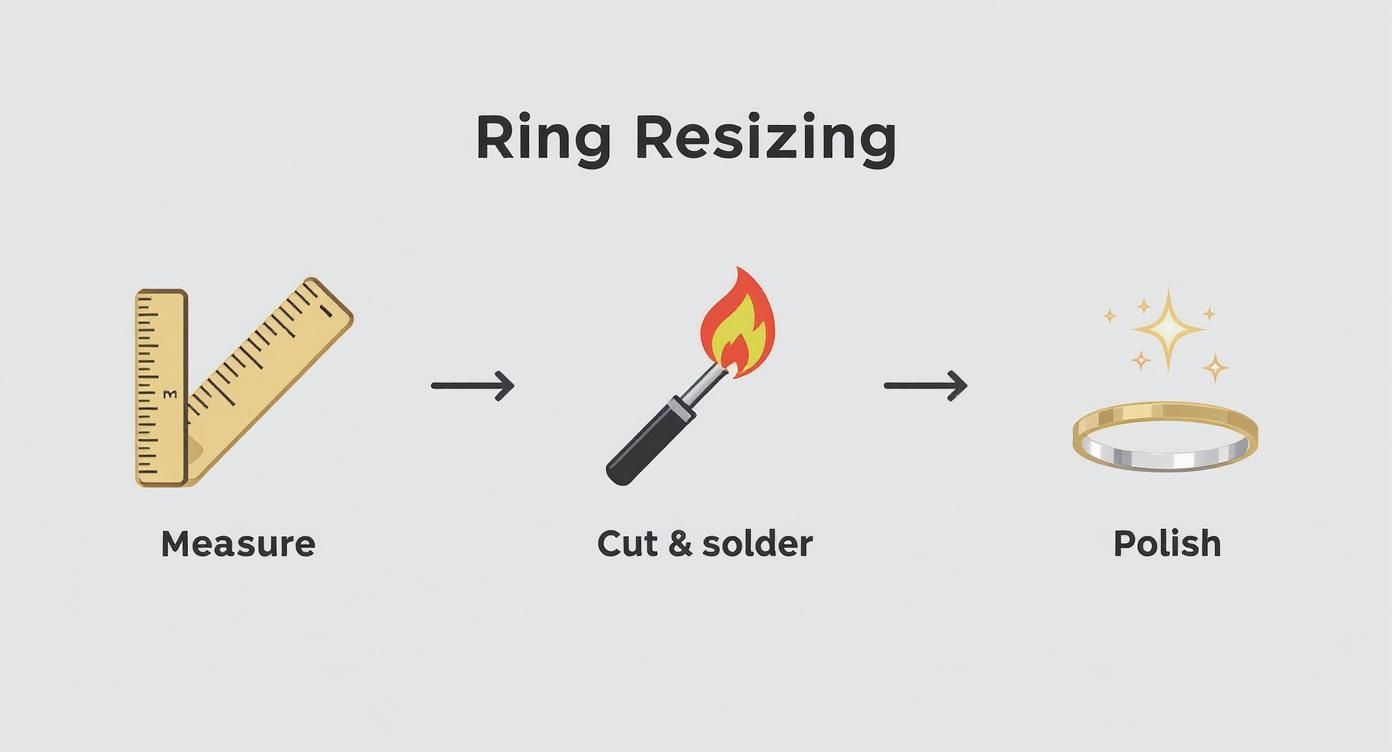
The image above shows the classic resizing method—cutting, soldering, and polishing. It’s this exact process that just isn't feasible for those non-resizable rings we've been talking about.
Considering a Ring Remake
So, what do you do when you need a significant size change, or your ring is made of an unworkable material? In these situations, the best option is often to have the ring remade.
A remake isn’t just a repair; it’s a complete rebirth. We melt down the precious metal and use your original diamonds and gemstones to create a brand new ring in the correct size, keeping all the sentimental value intact.
This is the ultimate solution for eternity rings or when a size change of more than two sizes is needed. It costs more than a standard resize, of course, but the result is a structurally perfect, beautifully fitting ring that honours the original piece you fell in love with.
How to Choose the Right Jeweller for Your Ring
Handing over a cherished ring is a big deal. It's not just another piece of jewellery; it’s a symbol of love, a family heirloom, or a memory you hold dear. Finding the right jeweller means finding someone who respects that and has the skill to do the job perfectly, preserving both its beauty and its story.
First things first, look for a jeweller with real, specialised experience. Don't be shy about asking if they've handled rings like yours before. Have they worked with platinum? Do they have experience with delicate pavé settings or tricky vintage designs? Expertise with specific metals and complex styles is crucial for a seamless result.
Then, dig a little deeper and check genuine customer reviews. Look for comments that specifically talk about their resizing services. Consistent praise for their craftsmanship, communication, and fair ring resizing prices is a great sign you've found a professional you can count on.
Key Questions to Ask Your Jeweller
Before you commit, have a chat with them. A good jeweller will always be happy to walk you through the process and answer your questions directly.
Here are a few essential things you should ask:
- Can you explain your resizing process? Knowing their technique will give you confidence in their abilities.
- Is my ring insured while it’s with you? This is a critical safety net that protects you against any potential loss or damage.
- Do you offer a guarantee on your work? A guarantee is a clear sign that they stand behind the quality of their craftsmanship.
- Will you provide a detailed, itemised quote upfront? Price transparency is key—it ensures there are no nasty surprises when you get the bill.
Your ring is more than an accessory; it’s a story. Choosing a jeweller is about finding a skilled artisan you can trust to care for that story, ensuring it can be told for generations to come.
Taking the time to find the right expert isn't just a precaution; it’s for your own peace of mind. It ensures your ring gets the meticulous care it deserves and comes back to you fitting perfectly, with its beauty completely intact.
Your Ring Resizing Questions, Answered
It's completely normal to have questions before you hand over a treasured piece of jewellery. To put your mind at ease, here are some straight answers to the things we get asked most often.
Can a Ring Be Resized More Than Once?
For most rings made of gold, platinum, or silver, the answer is yes. You can absolutely resize them multiple times.
That said, every time a ring is heated and reshaped, it puts a little stress on the metal. A good jeweller will always examine the ring first to make sure its structure is sound enough for another adjustment without becoming weak or brittle.
Will Resizing Devalue My Ring?
When it’s done right, absolutely not. A professional resizing job is an invisible mend that should not devalue your ring in any way.
The key here is quality. A shoddy job can leave visible seams or a distorted shape, which could affect the ring's value. This is exactly why it pays to trust your ring to an experienced craftsman who takes pride in their work.
How Far Can You Actually Size a Ring?
Going up or down by one or two sizes is usually a very straightforward job for most rings.
When you need to make a bigger jump—say, three or four sizes—it becomes a bit more complicated and can cost more. A major change might slightly alter the curvature of the band, especially if it has stones set along the sides. Your jeweller will walk you through the best way to handle a significant resize while protecting the ring's design.
At Daniel Fine, we're all about clear communication and exceptional craftsmanship. Contact us today for a personalised consultation and a transparent quote.