Ever wondered how a ring size in the US translates to one in Australia? A ring conversion chart is the key. It's a simple but vital tool that helps you match up ring sizes from different countries, whether you're dealing with the alphabetical system we use in Australia (and the UK) or the numerical sizes common in the US and Europe.
By comparing the internal diameter or circumference of a ring in millimetres, a chart lets you pinpoint your exact size equivalent. This means you can buy a ring from anywhere in the world and be confident it will fit perfectly.
Your Quick International Ring Size Conversion Chart
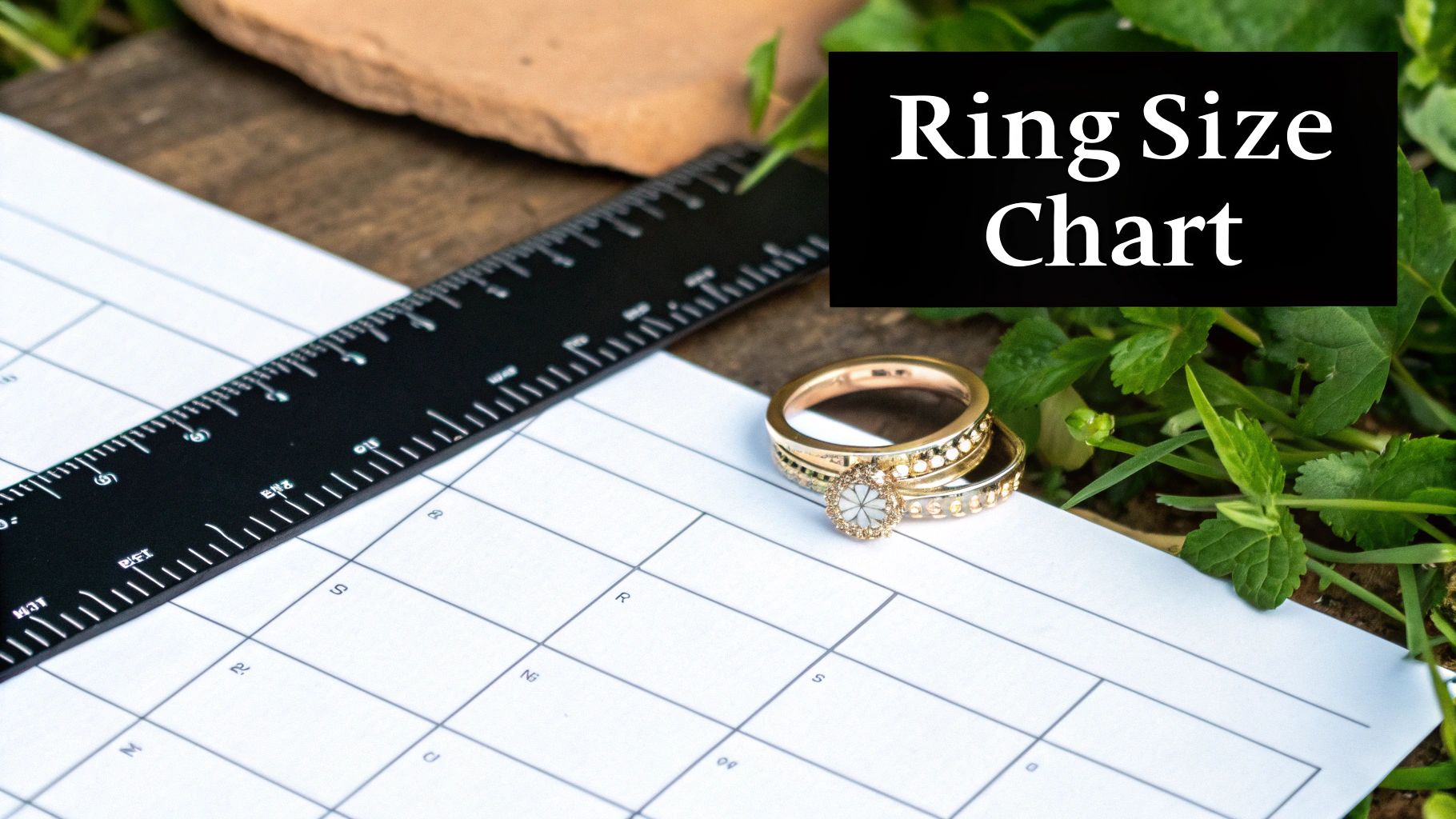
Finding the perfect ring should be exciting, not confusing. But with so many different sizing systems out there, it’s easy to get lost. A reliable conversion chart is your best friend, especially when you're buying from an international brand or just trying to figure out how a local size compares to one overseas.
This is particularly true for us in Australia. Our alphabetical sizing system is quite different from the numerical scales used in most other countries, which can make things tricky. The Australian ring size chart, running from A to Z with half sizes, is the same one used in the United Kingdom and Ireland, but it stands apart from the systems in the US or Europe. You can read more about these regional differences on resources like lindelli.com.
To cut through the confusion, we've put together a straightforward ring conversion chart below. Think of it as your go-to reference for comparing the world's most common sizing standards at a glance.
Quick International Ring Size Conversion Chart
This summary table lets you quickly convert between the major international ring sizing systems, along with their corresponding measurements in millimetres.
| AU / UK Size | US / Canada Size | EU Size (ISO 8653) | Japan Size | Diameter (mm) | Circumference (mm) |
|---|---|---|---|---|---|
| F | 3 | 44 | 4 | 14.1 | 44.2 |
| H | 4 | 46.5 | 7 | 14.9 | 46.8 |
| J | 5 | 49 | 9 | 15.7 | 49.3 |
| L | 6 | 51.5 | 11 | 16.5 | 51.9 |
| N | 7 | 54 | 14 | 17.3 | 54.4 |
| P | 8 | 56.5 | 16 | 18.1 | 57.0 |
| R | 9 | 59 | 18 | 19.0 | 59.5 |
| T | 10 | 61.5 | 20 | 19.8 | 62.1 |
| V | 11 | 64 | 23 | 20.6 | 64.6 |
| X | 12 | 66.5 | 25 | 21.4 | 67.2 |
| Z | 13 | 69 | 27 | 22.2 | 69.7 |
This chart is perfect for a quick check, but keep in mind that it only shows the most common sizes. For a more exhaustive breakdown covering the full range of sizes, be sure to check our Complete International Ring Conversion Reference further down the guide.
Key Sizing Systems At A Glance
To help you make sense of the table, here’s a quick rundown of what each system means:
- AU / UK Size: This is the alphabetical system we use, starting from A (the smallest) and going up to Z+.
- US / Canada Size: A numerical system that often includes half and quarter sizes for a more precise fit.
- EU Size (ISO 8653): This standard is straightforward – it’s based on the ring's internal circumference in millimetres, minus 40. So, a size 52 has a circumference of 52 mm.
- Japan Size: A numerical system that starts at size 1 and increases with every 1/3 mm of internal diameter.
How to Measure Your Ring Size Accurately at Home
Finding your perfect ring size doesn't always mean a trip to the jeweller. With a couple of simple techniques, you can get a very accurate measurement right at home. This is a lifesaver when you're planning a surprise or shopping online, helping you get a flawless fit from the get-go.
There are two main ways to do this reliably. The first method involves measuring your finger directly, while the second uses a ring you already own and love the fit of. Both work brilliantly if you're careful.
Method 1: Measure Your Finger with Paper or String
This is the classic, go-to method. It’s all about finding your finger's circumference, which is the key measurement on any ring size chart. All you need are a few common household items.
- Cut a Strip: Grab a thin strip of paper (around 15 cm long and 1 cm wide) or a piece of string that doesn't stretch.
- Wrap Your Finger: Wind the paper or string snugly around the base of the finger you'll be wearing the ring on. It needs to be firm but not uncomfortably tight—you want it to slide over your knuckle without a struggle, but not so loose it could fall off.
- Mark the Spot: With a pen, mark the exact point where the end of the paper or string overlaps to complete the circle.
- Measure the Length: Now, unwrap the paper or string and lay it flat against a ruler. Measure the distance from the end to the mark you just made, in millimetres (mm).
- Find Your Size: This measurement is your finger's circumference. Just match it to the corresponding AU ring size in our Complete International Ring Conversion Reference table below.
Pro Tip: Your fingers change size slightly throughout the day. For the best result, measure your finger in the evening when it’s likely to be at its largest. It's also best to avoid measuring when you're cold or right after a workout.
Method 2: Measure an Existing Ring
If you already have a ring that fits that finger perfectly, you can use it as a guide. This method is all about finding the internal diameter.
- Select a Ring: Pick a ring that has a similar band width to the one you're interested in. Wider bands tend to fit a bit more snugly, so this is an important detail.
- Use a Ruler: Lay the ring on a flat surface and place a ruler straight across its centre.
- Measure the Diameter: Measure the inside diameter of the ring in millimetres (mm), from one inner edge to the opposite inner edge. Make sure you're not including the thickness of the metal band in your measurement.
- Convert to Your Size: With the diameter measurement in hand, simply check our ring conversion chart to find its matching size.
Use Our Printable Ring Sizer Tool
If you want to take the guesswork out of it, our printable ring sizer is the way to go. It’s a reliable tool, as long as you print it correctly.
Here’s a look at what our printable sizer offers:
As you can see, it gives you two ways to measure—a wrap-around sizer for your finger and sizing circles for an existing ring—so you can double-check your result.
To get yours, just download and print our accurate Daniel Fine ring sizer. The most important step is to make sure your printer is set to 100% scale. Don’t use any "fit to page" settings, or the measurements will be off. You can download your free printable ring sizer from our resources page.
The Complete International Ring Conversion Reference
While a quick-lookup table is handy, a truly definitive ring conversion chart gives you the granular detail needed for absolute confidence. This is crucial when you're investing in something special, like an engagement ring or a bespoke piece, where getting the fit just right is non-negotiable. Over time, different countries and regions have established their own sizing standards, resulting in a confusing mix of letters, numbers, and measurements.
Getting your head around these different systems is the first step. Each one is based on a specific measurement—either the internal circumference or the internal diameter of the band—which is why simply guessing an equivalent size rarely works out.
Understanding the Sizing Systems
To shop for jewellery internationally with ease, it really helps to know what each sizing system actually represents. The differences might seem small, but they can make all the difference in fit.
- AU / UK System: This is the alphabetical system we use here in Australia. It starts with the smallest sizes at the beginning of the alphabet (e.g., A, B, C) and moves up from there.
- US / Canada System: This is a numerical scale that starts from size 0. You'll often see half and even quarter sizes, which allows for a much more precise fit.
- European System (ISO 8653): This is probably the most straightforward standard. The EU size is simply the ring's internal circumference in millimetres. So, a size 54 ring has an internal circumference of exactly 54 mm. Simple as that.
- Japanese System: This is another numerical system, but it’s based on the ring's diameter and has its own unique scale, so a direct conversion is essential.
The Australian ring size system is closely linked to standards developed in the UK and other Commonwealth countries. Our metric system uses a step of 1.25 mm for each alphabetical size, with size C as the baseline at a 40 mm circumference. This system is overwhelmingly popular with local jewellers; in fact, over 90% of rings sold in Australia are sized using this very conversion chart. You can find more on the history of these standards on Wikipedia's ring size page.
Detailed International Ring Size Conversion Data
Here's my go-to reference table, designed for total precision. It covers an extensive range of sizes, including half-sizes, so you can cross-reference your measurement with its exact international counterparts. For the most accurate match, find your measurement in the diameter (mm) or circumference (mm) columns.
| AU / UK Size | US / Canada Size | EU Size (ISO 8653) | Japan Size | Diameter (mm) | Circumference (mm) |
|---|---|---|---|---|---|
| A | 0.5 | 38 | – | 12.0 | 37.8 |
| B | 1 | 39.2 | – | 12.4 | 39.1 |
| C | 1.5 | 40.5 | 1 | 12.8 | 40.3 |
| D | 2 | 41.7 | 2 | 13.2 | 41.5 |
| E | 2.5 | 43 | 3 | 13.6 | 42.9 |
| F | 3 | 44.2 | 4 | 14.0 | 44.2 |
| G | 3.5 | 45.5 | 5 | 14.4 | 45.4 |
| H | 4 | 46.7 | 7 | 14.8 | 46.7 |
| I | 4.5 | 48 | 8 | 15.2 | 48.0 |
| J | 5 | 49.2 | 9 | 15.6 | 49.3 |
| K | 5.5 | 50.5 | 10 | 16.0 | 50.5 |
| L | 6 | 51.7 | 11 | 16.4 | 51.8 |
| M | 6.5 | 53 | 12 | 16.8 | 53.1 |
| N | 7 | 54.2 | 14 | 17.2 | 54.4 |
| O | 7.5 | 55.5 | 15 | 17.6 | 55.7 |
| P | 8 | 56.7 | 16 | 18.0 | 57.0 |
| Q | 8.5 | 58 | 17 | 18.4 | 58.2 |
| R | 9 | 59.2 | 18 | 18.8 | 59.5 |
| S | 9.5 | 60.5 | 19 | 19.2 | 60.8 |
| T | 10 | 61.7 | 20 | 19.6 | 62.1 |
| U | 10.5 | 63 | 22 | 20.0 | 63.4 |
| V | 11 | 64.2 | 23 | 20.4 | 64.6 |
| W | 11.5 | 65.5 | 24 | 20.8 | 65.9 |
| X | 12 | 66.7 | 25 | 21.2 | 67.2 |
| Y | 12.5 | 68 | 26 | 21.6 | 68.5 |
| Z | 13 | 69.2 | 27 | 22.0 | 69.7 |
| Z+1 | 13.5 | 70.5 | – | 22.4 | 71.0 |
With this table, you're not just guessing—you're working with precise data that jewellers around the world rely on every day.
Visual Guide to Home Measurement Methods
Of course, to use this chart, you first need a reliable measurement. The infographic below shows you two of the most common ways to do this yourself at home.
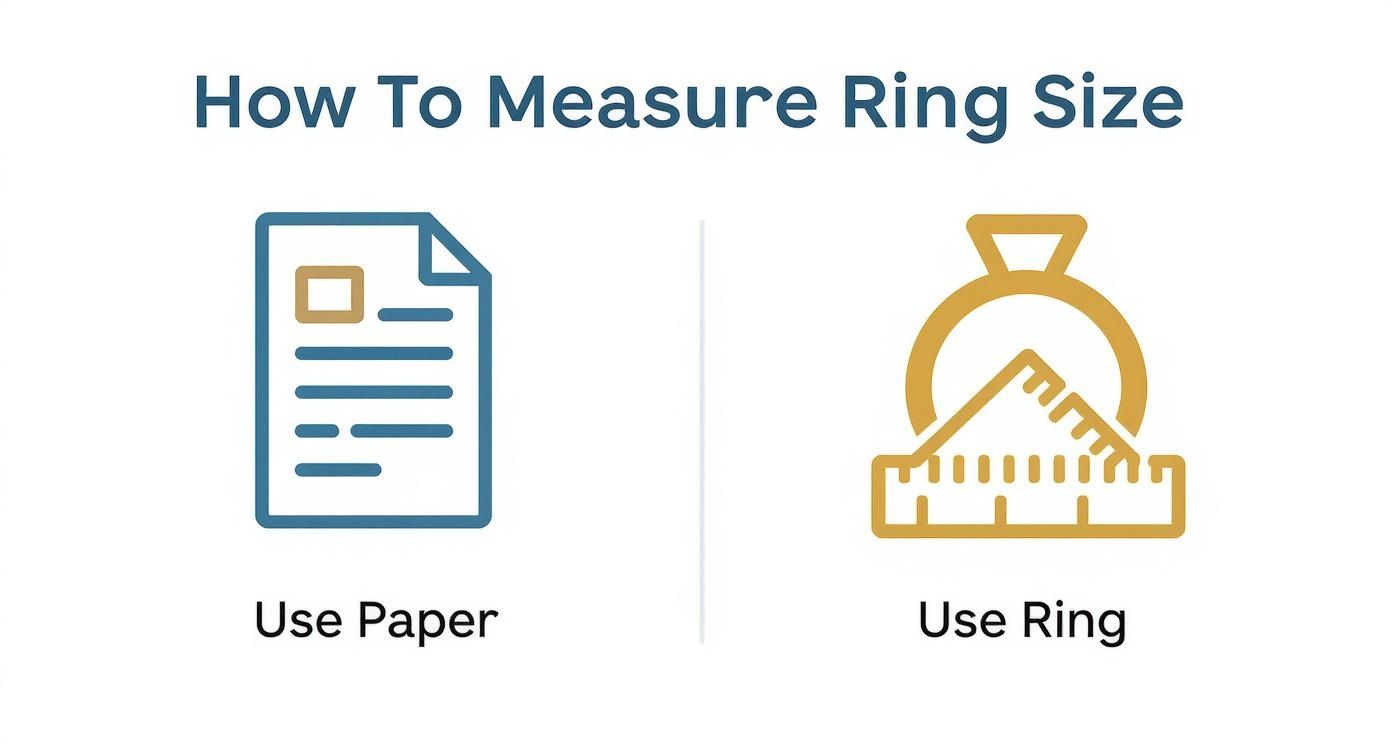
This guide shows that whether you're measuring the circumference with a strip of paper or finding the diameter of a ring you already own, you can get a solid measurement to use with our conversion chart.
A common mistake I see is people pulling the paper strip too tight, or including the metal of the band when measuring an existing ring's diameter. Always measure the internal space only for complete accuracy. This makes sure the measurement you bring to the ring conversion chart is spot-on.
By combining a careful home measurement with this detailed reference guide, you can take all the guesswork out of the process. You’ll be able to confidently choose the perfect ring size from us at Daniel Fine, or from any jeweller worldwide.
Key Factors That Influence Your Perfect Ring Fit
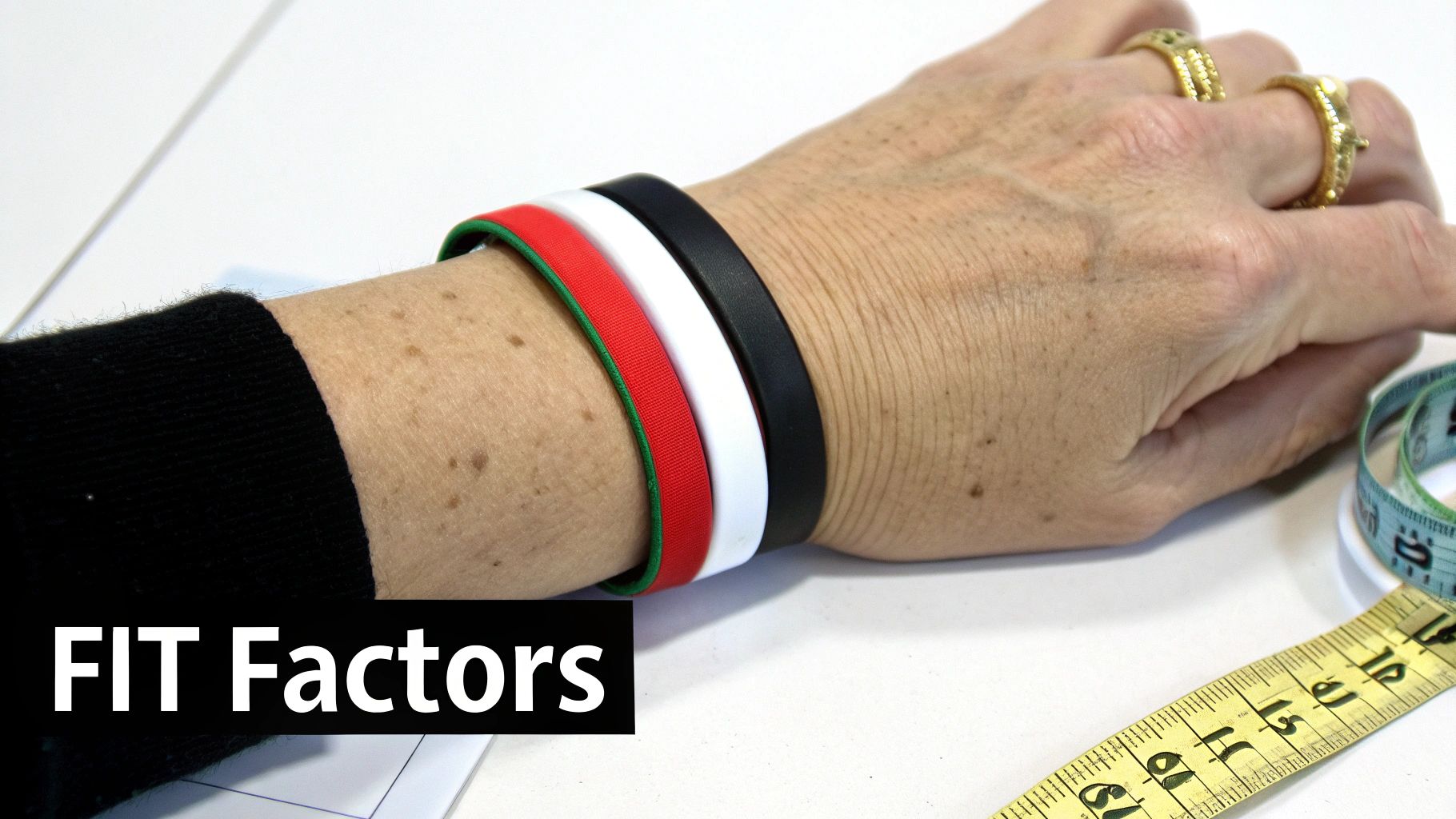
While our ring conversion chart is your go-to resource for the numbers, finding a truly perfect fit is more of an art than a science. There are a few other crucial factors to consider, because a ring that’s technically your size can still feel too tight or loose if you don't account for them.
Getting these details right is the key to finding a piece that’s comfortable for everyday life, not just for the five minutes you spend measuring. The ring’s design itself—specifically its width and internal shape—plays a massive role in how it actually feels on your finger.
Band Width and Fit Style
First up, think about the width of the band. A wide ring band covers more surface area on your finger, which means more friction and more skin being displaced. It’s simple physics, really. This is why a wide ring (anything over 6mm) will feel much snugger than a delicate, narrow band of the very same size.
- For Wide Bands: It’s standard practice to go up at least a half-size for a comfortable fit. For instance, if you measure as an AU size N on a standard sizer, you’ll likely find an N½ or even an O is a much better fit for a wider style.
- For Narrow Bands: These are more forgiving. Your measured size is usually spot on for these more delicate designs.
The inside of the ring matters just as much. You'll typically find two main styles: 'standard fit' and 'comfort fit'. A standard fit has a completely flat interior, sitting flush against your skin. A comfort fit, on the other hand, is slightly domed on the inside. This subtle curve means less metal is in contact with your finger, which makes it feel a bit looser and helps it glide over the knuckle more easily. Many people actually size down slightly for a comfort fit band.
Your Finger and Daily Fluctuations
Our bodies are constantly changing, and our fingers are no exception. Their size can fluctuate quite a bit, not just from day to day, but even over the course of a few hours. Understanding these natural variations helps you choose a size that will feel right all the time.
Here are a few of the biggest things that can affect your finger size:
- Knuckle Size: For many of us, the knuckle is the widest part of the finger. Your ring needs to be big enough to get over it, but not so loose that it spins around once it’s on.
- Finger Shape: Fingers can be tapered (wider at the base) or more uniform. If you have tapered fingers, you'll need a snugger fit to stop the ring from sliding off.
- Temperature: We’ve all experienced it—your fingers swell in the heat and shrink when it's cold. The best time to measure is at the end of the day, at a comfortable room temperature, when your finger is likely at its largest.
- Diet and Hydration: A salty meal or not drinking enough water can cause you to retain fluid, making your fingers swell up temporarily.
A great rule of thumb is that a well-fitting ring should slide on with relative ease but need a little twist and a bit of a wiggle to get off. If it comes off with no resistance at all, it's almost certainly too big.
When you combine this knowledge with our ring conversion chart, you're fully equipped to find a ring that doesn't just fit, but feels like it was made just for you.
Getting it Right: Professional Sizing and Resizing
While measuring at home and using a good ring conversion chart can get you surprisingly close, you just can't beat the accuracy of a professional jeweller. Especially when you're investing in something as important as an engagement ring or a custom wedding band, getting an expert to size you up provides complete peace of mind.
A professional fitting is straightforward and only takes a moment. Your jeweller will have you try on a series of graduated metal rings, called a ring gauge, to pinpoint your exact size. This is far more dependable than using paper or string because it perfectly mimics the rigid feel of an actual ring on your finger. A seasoned jeweller can also give you tailored advice based on your knuckle shape and the specific style of ring you have in mind.
Here at Daniel Fine, we always encourage a professional sizing for our bespoke creations. It’s a simple step that ensures the final piece, made just for you, will be a perfect, comfortable fit right from the start.
When Your Ring Needs a Little Adjustment
Even with the best planning, sometimes a ring's fit isn't quite right. Our fingers can change due to weight fluctuations, pregnancy, or even the weather. And of course, if you've received a ring as a surprise gift, it might need a tweak. The great news is that most rings made from precious metals—like gold, platinum, and silver—can be resized by a talented jeweller.
The process generally follows one of two paths:
- Sizing Down: To make a ring smaller, a jeweller carefully removes a small section of the band. They then expertly reshape it into a perfect circle and solder the two ends together. After a thorough polish, the join becomes completely invisible.
- Sizing Up: For a larger fit, the band can be gently stretched, which works well for small adjustments of up to half a size. For anything more, the jeweller will cut the band and add a small piece of matching metal, then solder and polish it for a seamless finish.
While effective, this process does have its limits. Most rings can be safely adjusted up or down by about two sizes. Going beyond that can risk weakening the ring's structure, particularly if it has delicate stone settings.
Rings That Can't Be Resized
Unfortunately, some rings are simply not designed to be altered. The materials used or the complexity of the design can make resizing difficult, if not impossible. It's really important to know about these limitations before you buy, as it impacts the ring's wearability over the long term.
Here are a few common examples of rings that are tricky to resize:
- Eternity Bands: With gemstones set all the way around, there’s no plain metal to work with. Cutting the band would disrupt the entire setting pattern.
- Tension-Set Rings: These unique designs rely on the band's pressure to hold the stone in place. Altering the band would release that tension, and the stone would be lost.
- Certain Metals: Modern metals like titanium, tungsten, and stainless steel are incredibly durable and hard, which makes them almost impossible for most jewellers to resize.
- Intricate Engravings: If a ring has a detailed pattern that wraps all the way around, resizing it would inevitably damage or break the beautiful design.
When considering a ring with any of these features, being absolutely certain of your size is crucial. A professional fitting, combined with a reliable ring conversion chart, is the best way to ensure you get it right the first time.
Your Ring Sizing Questions Answered
Even with the most accurate charts and careful measuring, there are always a few real-world questions that pop up. It’s completely normal! Getting the fit just right can feel a bit daunting, but we're here to clear up those final uncertainties.
Think of this as your go-to troubleshooting guide. We’ve pulled together the most common questions we hear from our clients, covering everything from why your hands aren't the same size to what to do when you're stuck between two sizes.
Are My Left and Right Hand Ring Sizes the Same?
This is a fantastic question, and one we get all the time. The short answer is no, probably not. For most people, the fingers on their dominant hand are a little larger – usually by about half a size.
It makes sense when you think about it. You use your dominant hand for everything, which builds up the muscles and can make the knuckles slightly bigger over time. That’s why you absolutely must measure the specific finger on the hand you plan to wear the ring on. A ring that fits your right hand perfectly might feel a bit loose on your left.
What if My Finger Measures Between Two Sizes?
Finding yourself between sizes is incredibly common, especially when you’re using a detailed ring conversion chart. You might measure your finger and find it's not quite a size N, but not a full N½ either.
In this situation, our advice is nearly always to go with the larger size. It’s far better to have a ring that’s a fraction too big than one that’s painfully tight. A slightly loose ring can often be corrected with small, discreet sizing inserts, but a tight ring can be uncomfortable and even restrict circulation.
Expert Advice: From a jeweller’s perspective, it’s generally much easier to size a ring down than to size it up. Choosing the larger option gives you more wiggle room for adjustments down the track.
How Much Can a Ring Actually Be Resized?
How much a ring can be altered really comes down to its design and the metal. A simple, plain band in gold, platinum, or silver? That's usually no problem at all for a skilled jeweller.
As a rule of thumb, most rings can be resized up or down by one to two full sizes. Pushing it further than that can stress the metal, weakening the band or compromising the settings holding any gemstones.
Some designs, however, are another story entirely:
- Eternity Bands: Because the stones go all the way around, there’s no plain metal to work with. Resizing them often means completely remaking the ring.
- Tension Settings: The ring's band is engineered to hold the gemstone in place with pressure. Change the band, and you lose the tension, meaning the stone could fall out.
- Intricate Patterns: If a detailed engraving wraps around the entire band, resizing will inevitably break the pattern.
- Alternative Metals: Metals like tungsten and titanium are incredibly hard, and they simply can’t be resized with standard jewellery tools.
Understanding these limitations from the start is crucial. If you've got your heart set on a style that can't be resized, getting that initial measurement spot-on with our guide and a professional fitting is the key to a perfect fit.
At Daniel Fine, we're all about creating bespoke jewellery that feels like it was made just for you—because it was. Our expert artisans are here to guide you through every detail, from sizing to design, to ensure your piece is a perfect fit for your life.
Explore our collection or start your custom jewellery journey at https://danielfine.com.au.